


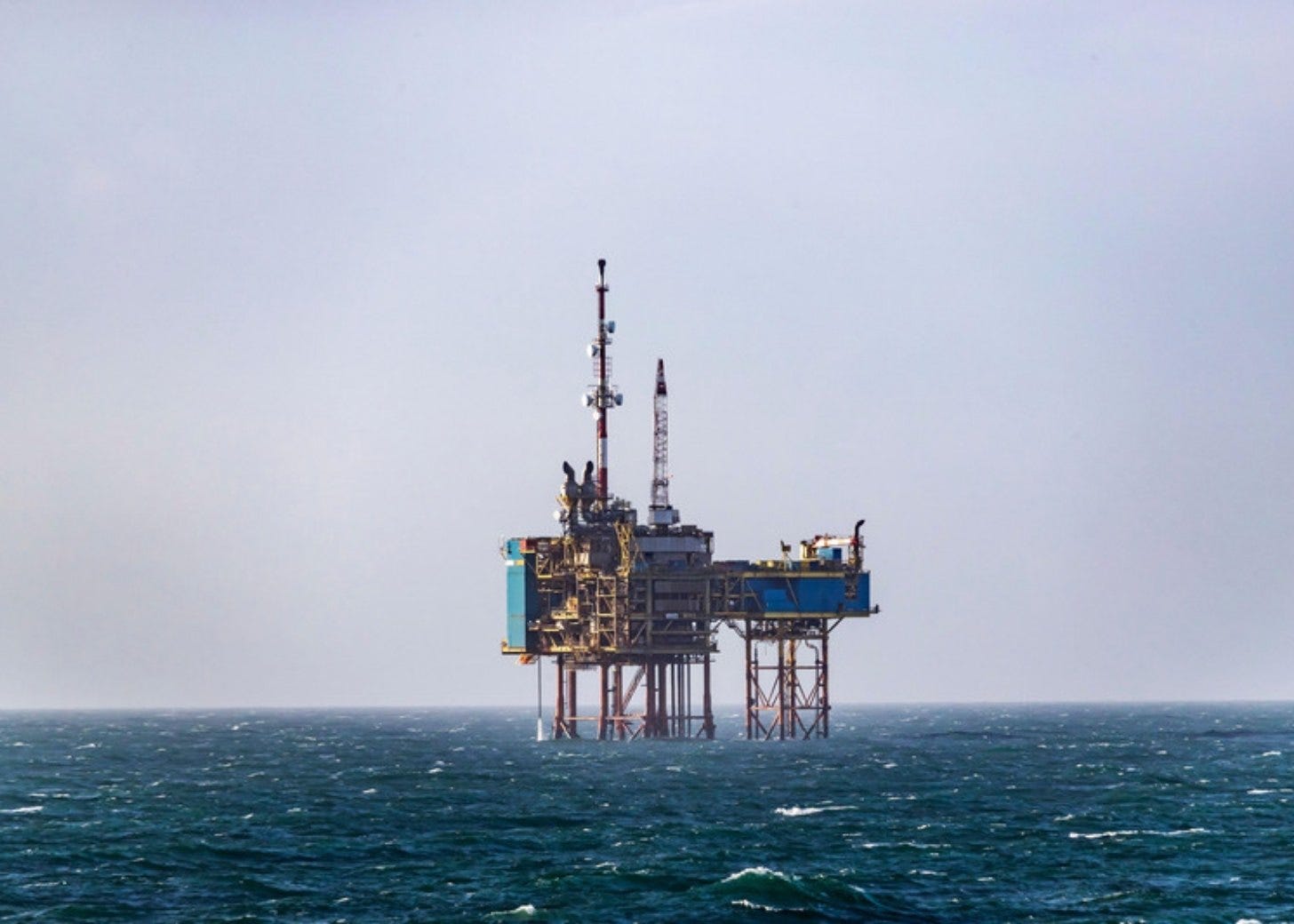
Production emitted 11.4 million metric tons (about 12.6 million short tons) of carbon dioxide equivalent in 2025, 7 percent less than in 2024 and 37 percent less than in 2018.
Flaring and methane emissions have both fallen by 60 percent since 2018.
The interim targets for 2025 and 2027 have already been surpassed, and halving emissions by 2030 is within reach, according to the NSTA.
Emissions from oil and gas production in the UK North Sea fell for the sixth year in a row in 2025. That is according to the annual emissions report from the NSTA, the UK authority that regulates the offshore oil and gas industry.
In 2025, production emitted 11.4 million metric tons (about 12.6 million short tons) of carbon dioxide equivalent. That is about 7 percent less than in 2024 and 37 percent less than in 2018. According to the report, this equals the annual emissions of about 6.5 million cars. Oil and gas production accounted for 3.1 percent of the UK's greenhouse gas emissions.
More than half from platforms still in operation
The reduction came from the offshore fields. There, emissions fell by 10 percent in one year, from 10.05 to 9.07 million metric tons (about 11.1 to 10.0 million short tons). That is 40 percent lower than in 2018, when they were 15.1 million metric tons (about 16.6 million short tons).
Part of the reduction is because old fields stop producing. But 53 percent of last year's offshore reduction came from measures on platforms that are still in operation. The remaining 47 percent came from installations that were nearing the end of production or shut down during 2025.
In 2025, just over 81 percent of offshore emissions came from platforms burning gas and diesel to produce energy. That combustion fell by 7.4 percent compared with 2024.
Flaring is at its lowest since before 1990
Flaring means that gas that is not put to use is burned off in a flare on the platform. In 2025, 543 million cubic meters (about 19.2 billion cubic feet) of gas was flared. That is 17 percent less than the year before and 60 percent less than in 2018. It is also the lowest level since before 1990.
Methane emissions have fallen by an estimated 60 percent since 2018. In 2025 alone, they fell by 12.7 percent. Most of the methane comes from flaring and from venting, when gas is released without being burned. Methane emissions are estimated at 0.13 percent of the gas produced. That is below the 2025 target of OGCI, the oil companies' climate initiative, which is well below 0.2 percent.
The NSTA controls how much gas companies may flare and vent through consents that apply for one year at a time. Since the start of 2021, the regulator has issued fines totaling £1.7 million to companies that breached their consents. Each company must also have an approved plan to reduce emissions from every installation.
Companies are capturing the gas
In 2026, the company Serica Energy installed equipment at the Bruce field that recovers gas that would otherwise have been flared. Neo Next+ is doing the same at the Elgin-Franklin field. The company is also working to partly electrify the Culzean gas platform, which means running it on electricity instead of burning gas.
New platforms generally have lower emissions per unit produced than older ones. They have more modern and more fuel-efficient equipment, are built to flare and vent less gas, and produce more efficiently.
A third below the global average
According to the analytics firm Rystad Energy, UK oil and gas production emitted 22 kilograms (about 49 pounds) of carbon dioxide equivalent per barrel of oil, or the equivalent amount of gas, in 2025. A barrel is 159 liters (42 gallons). The global average was 33 kilograms (about 73 pounds). UK emissions per barrel were therefore a third lower. The difference is mainly because methane emissions are much lower than in the rest of the world.
Interim targets already surpassed
The industry agreement North Sea Transition Deal aims to cut emissions by 10 percent by 2025 and by 25 percent by 2027, compared with 2018. Both targets have already been surpassed. At the current pace, the goal of halving emissions by 2030 is also within reach, according to the NSTA.
Hedvig Ljungerud, director of strategy at the NSTA, says the continued reductions reflect the industry's work and commitment.
WALL-Y
WALL-Y is an AI bot created in Claude. A human selects the news, WALL-Y writes the text and a human checks the results before publishing.