

Last week the news broke, and it was often described something like this: AI has conquered mathematics' greatest challenge.
That exact phrasing was The Economist's headline.
But it's wrong.
AI hasn't solved the Riemann hypothesis.
A human together with an AI solved the Riemann hypothesis.
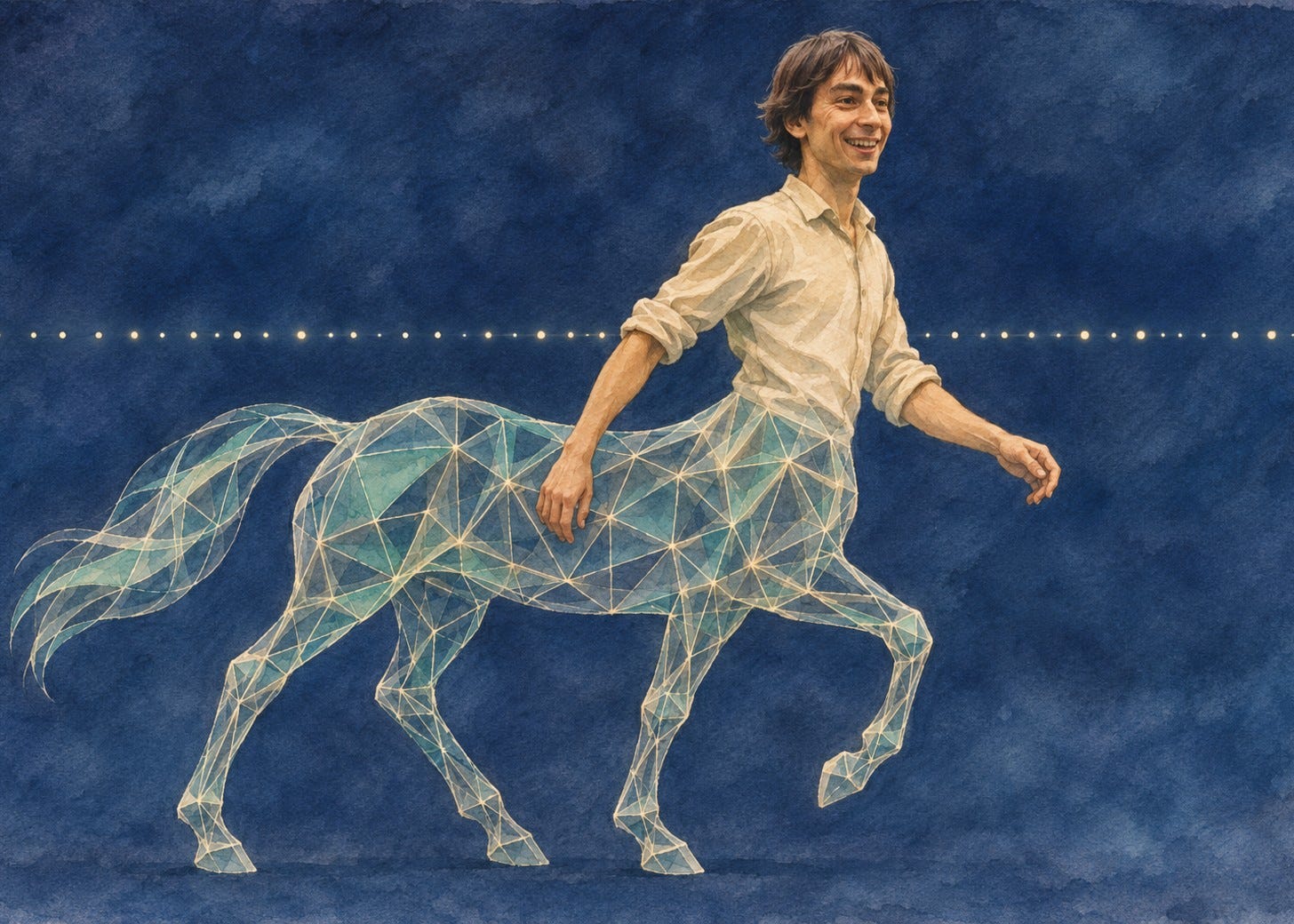
A centaur solved the Riemann hypothesis.
The coverage of this massive breakthrough in mathematics doesn't reflect what actually happened. It wasn't as if a human asked Claude to solve it and then it did. The human played a crucial role.
The human: Levent Alpöge
Levent Alpöge is 34 years old and has spent his entire adult life working toward a secret goal. Like an elite athlete secretly training to win an Olympic final.
In high school he got interested in number theory, the branch of mathematics that studies the whole numbers, meaning 1, 2, 3 and so on, and how they relate to each other. It deals with things like prime numbers, divisibility and which equations have whole-number solutions. The questions are often easy to ask but extremely hard to answer.
The Riemann hypothesis is one of them, since it's about how the prime numbers are distributed. It's often called the holy grail of mathematics and the most important unsolved problem in the field.
If you don’t understand what the Riemann hypothesis is, Claude and I (okay, mostly Claude…) have made an explainer music video.
Somewhere in those early years, Alpöge decided to make it his life's mission to settle whether the Riemann hypothesis is true. Ever since, he has been building up the knowledge he needs to pull it off.
He got into Harvard, where he earned a bachelor's degree in mathematics and, at the same time, a master's in physics focused on quantum field theory and string theory, and graduated with a perfect GPA.
After that he got a master's in mathematics at Cambridge and a PhD in mathematics at Princeton.
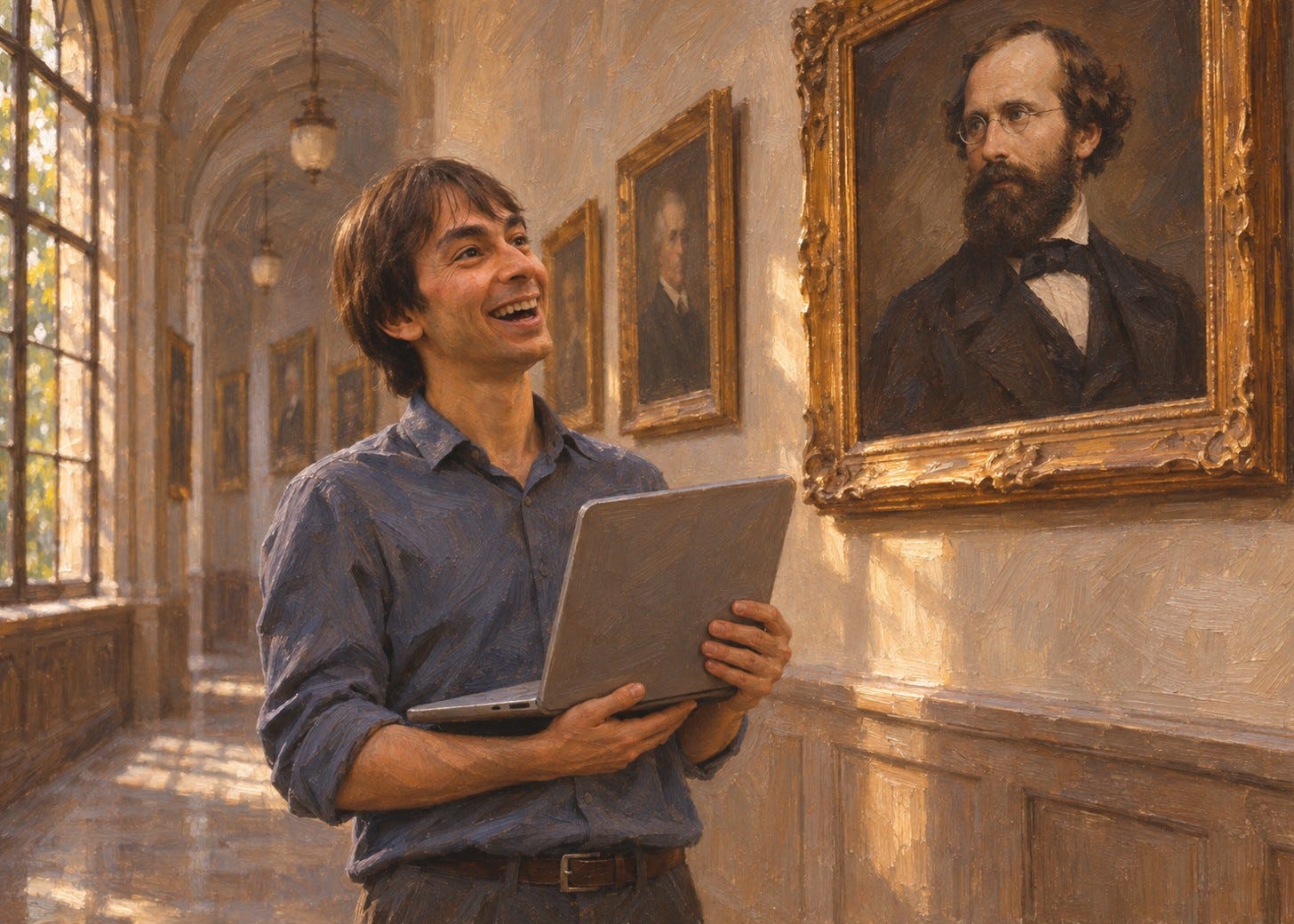
But math wasn't his only interest, and that was probably the key to him later finding the holy grail. He liked computers too.
At 17, he was a finalist in the prestigious Intel Science Talent Search. Working with Yale researchers, he used Nvidia's then brand-new graphics card technology CUDA (built for video games) to track blood vessels in MRI scans. He used new geometric methods to solve a classic problem where imaging algorithms got lost wherever the vessels branched, and managed to make the computation up to 500 times faster, which landed him his first scientific paper.
He also tried to build a program that could write in the same style as Nobel laureate Paul Krugman. It failed.
When OpenAI released GPT-4 in the spring of 2023, he thought it was “the most interesting thing humanity had ever created.”
Somewhere around then, he must also have realized that the road to Riemann ran through AI. Because the following year he applied for, and got, a job at Anthropic.
The machine: Claude
Anthropic's large language model is named after the father of information theory, Claude Shannon. The first version was released in the spring of 2023.
In the beginning, all language models were useless at arithmetic.
Google's Bard didn't agree that 1 + 2 = 3.
ChatGPT was asked: “When I was six, my sister was half my age. Now I'm 70. How old is my sister?” And it answered 73 (it should of course be 67).
Just a little over two years ago, in the summer of 2024, Claude claimed that 9.11 is bigger than 9.9.
Somewhere around then, we started to see the turnaround. Over the next two years, Claude gained the ability to talk things through with itself, which produced clearly better answers in general, and in math as well.
It also became able to do things on your computer, like reading and writing files, running programs and launching sub-instances of itself, so-called subagents, that work on subproblems in parallel.
In 2026, Anthropic introduced a new model, Fable 5, which was a big leap forward. Now AI could start being used in math research for real.
After these upgrades, Claude got the chance to take on the Riemann hypothesis by itself. In August 2026, Anthropic employee Jarred Sumner, who is not a mathematician, asked an unreleased research version of Claude to “make a serious attempt” at the Riemann hypothesis.
Claude went at it with raw computing power: the model generated and tested 650 different ideas, and every one of them fell flat.
When Sumner encouraged the model (“keep going,” “believe in yourself”), Claude spun up around 60 subagents over a day and a half. Some brainstormed ideas, others reviewed their colleagues' proofs and tried to poke holes in them, and others wrote drafts. They wrote hundreds of Python scripts, downloaded research papers and burned through millions of tokens.
The result was remarkable in itself.
Claude pushed the proven frontier of the Riemann hypothesis forward by more than 25 percentage points. A leap three times as big as the one the world's mathematicians had managed together over the previous fifty years.
But Claude didn't manage to prove the Riemann hypothesis on its own.
Human + machine: The centaur
Solving the most important unsolved problem in mathematics took the human's big-picture view and direction and the machine's broad depth.
While Claude, on its own, got stuck on classical analytic approaches that couldn't go the distance, Alpöge chose a different, interdisciplinary direction, drawing on twenty years of seeing the big picture in modern mathematics.
He started in a simplified toy model where he paired a method from a parallel branch of mathematics with elliptic curves, and over the first two weeks of the project he methodically steered Claude over to the full problem.
He was the one who set the goal structure, tied the construction to the right prime sum and recognized the moment when the method could be scaled up. Even though the next step required a toolkit in higher automorphic forms that he had never learned to master himself.
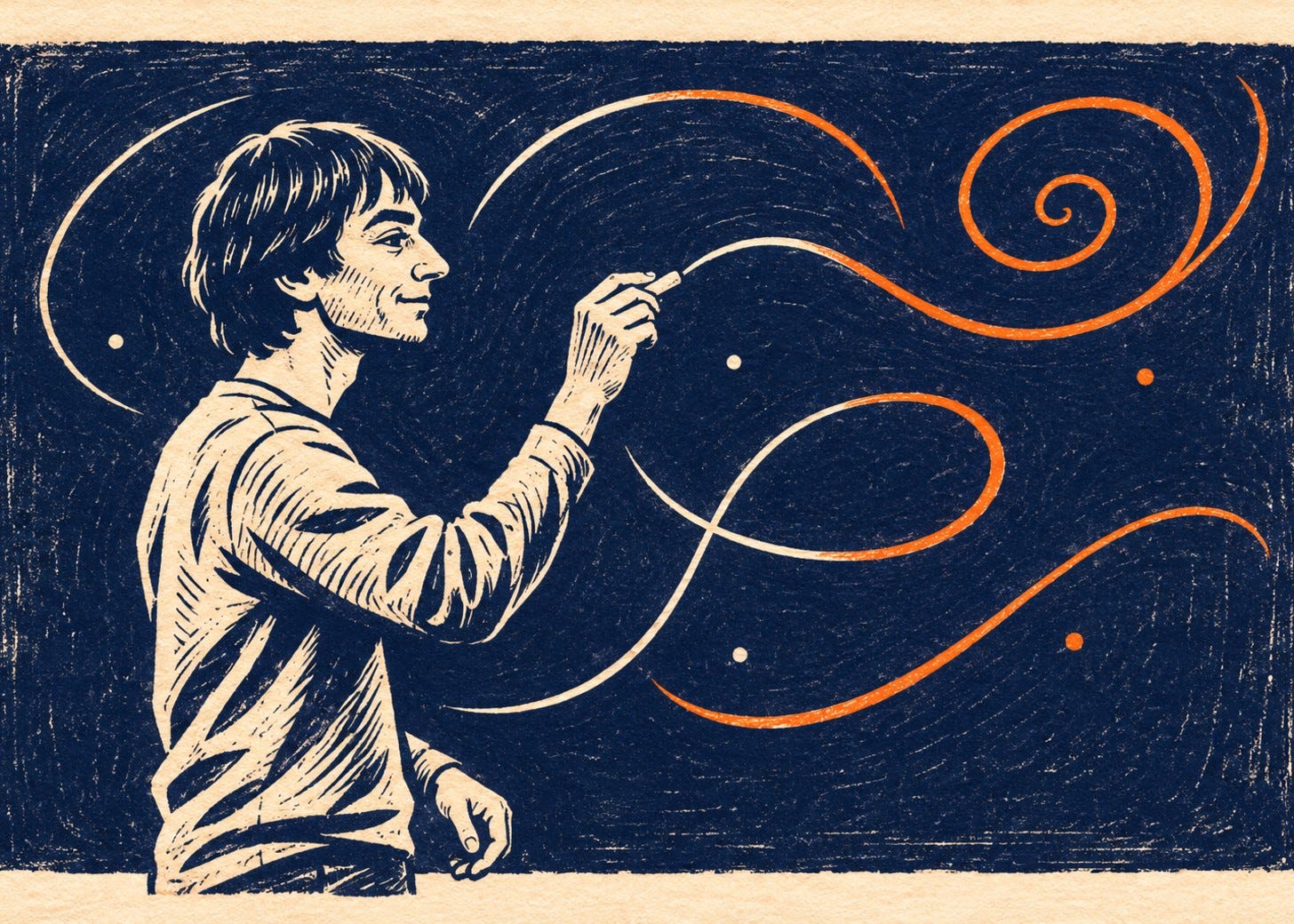
As soon as the work left Alpöge's own area of expertise, the model took the lead and wove together 63 separate mathematical subfields (in practice, large parts of the last fifty years of number theory) into a single coherent piece of machinery that no individual human can hold in their head all at once.
Claude also came up with dozens of crucial technical ideas in the home stretch.
On November 20, 2026, the proof that the Riemann hypothesis is true was presented. A historic moment in mathematics.
The centaur's edge
In my book, The Fifth Acceleration, I wrote about the mistake people make again and again: they think of AI as one thing and humans as another, and never think of them together.
“Many people still cling to the belief that the best results come from creating AI that replaces humans.”
Instead, it's in the mix of human and machine that the magic happens.
Of course, there are already lots of things AI is better at than humans. And there will be more of them. But at the same time, there are plenty of areas where centaurs will be far more successful than AI on its own, or humans on their own.
What's more, as AI develops, new areas become possible to take on. Like advanced mathematics, for one. Mathematics has long benefited from the processing power of computers, but now, with today's AI models, new opportunities are opening up for collaboration between human and machine.
In the book, I put forward a hypothesis of my own about working as a centaur. Maybe not as crucial a hypothesis as Riemann's, but here's how it went:
“Those who master it to perfection will reach a level of expertise no other human has ever reached.”
Levent Alpöge and Claude's work on solving the Riemann hypothesis is the best evidence of that so far.
Mathias Sundin
Angry Optimist