


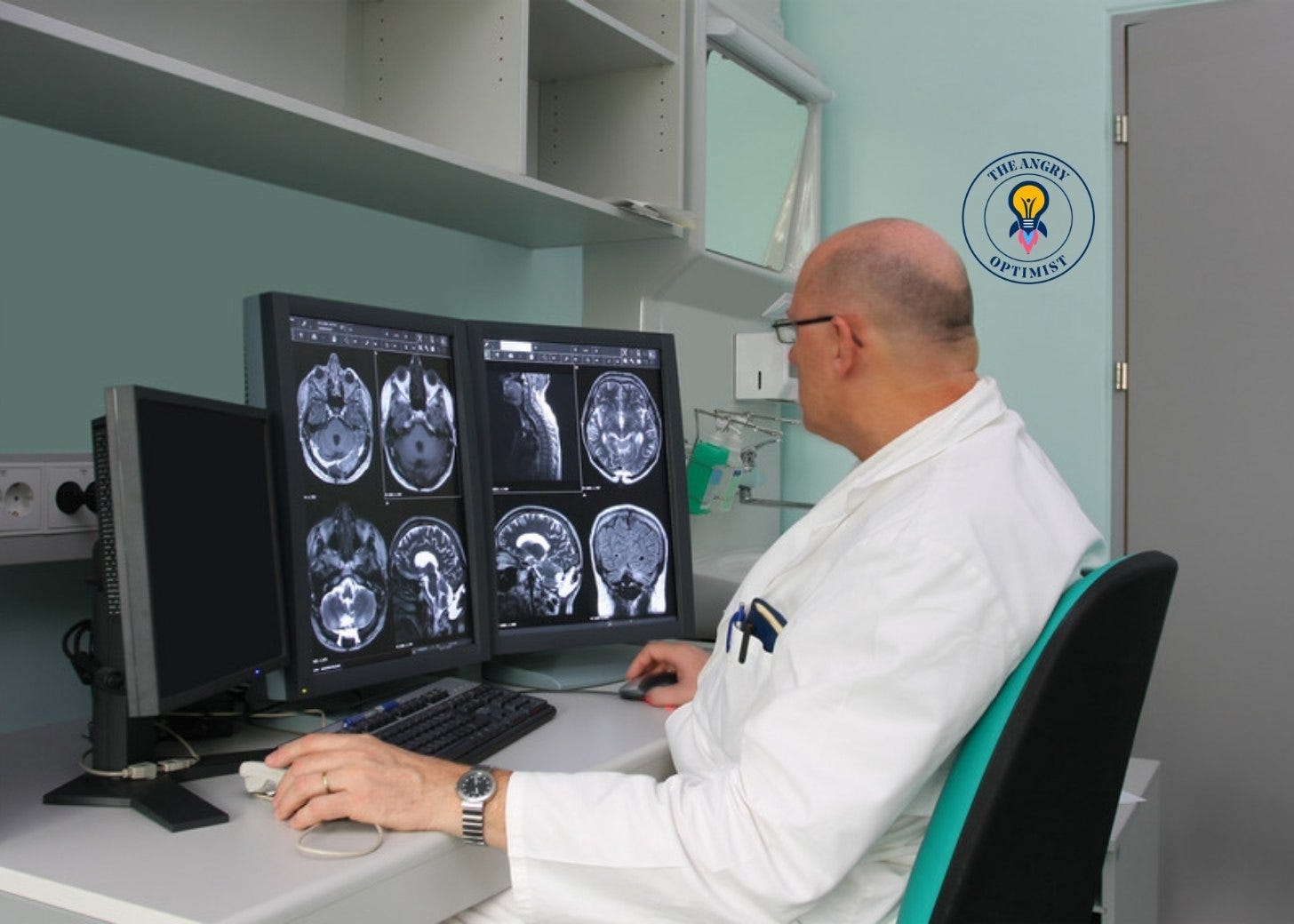
The AI found 73 percent of the cancer cases on scans that had been judged normal, compared with 39 percent for radiologists.
On scans taken more than two years before diagnosis, the AI found 68 percent of the cases, compared with 23 percent for the doctors.
The results held on scans from several hospitals and different scanners, and the AI gave the same answer on repeat scans in 90 to 92 percent of cases.
Pancreatic cancer can be visible on a CT scan before a doctor sees it. An AI model from Mayo Clinic in the US found signs of the cancer on scans that radiologists had judged to be normal. The scans the AI flagged were typically taken 475 days, or about 16 months, before the patients were diagnosed.
The model is called REDMOD. The study is by researchers at Mayo Clinic, MD Anderson Cancer Center in Texas and the University of Washington. It is published in the medical journal Gut.
The cancer is often found too late
Pancreatic cancer has low survival rates, mainly because it is detected late. More than 85 percent of patients are diagnosed only after the cancer has spread, according to the US National Cancer Institute. Fewer than 15 percent are alive five years after diagnosis. The early changes show up faintly or not at all on ordinary scans.
The researchers point to calculations showing that survival more than doubles if the share of cases found while the cancer is still localized rises from 10 to 50 percent. The goal is to find the cancer at the very earliest stage, when treatment has the best chance of working.
In lung cancer, the share of cases caught early in the US has nearly doubled in 20 years, partly thanks to CT screening. When the cancer is found early, nearly two in three lung cancer patients are alive five years later.
Nearly twice as many cases
The researchers trained the AI on scans from 969 patients. Of these, 156 later developed pancreatic cancer, while 813 stayed healthy. The model was then tested on 493 new patients, of whom 63 later developed cancer. For each patient with cancer there were about seven healthy ones, so that the test resembles a situation where the disease is rare.
All the scans of the patients who later developed cancer had been judged normal. They were taken between three months and about three years before diagnosis.
In the test, REDMOD found 73 percent of the cancer cases. Two abdominal radiologists read the same scans without knowing which patients later became ill. They found 39 percent. On scans taken more than two years before diagnosis, the AI found 68 percent of the cases, compared with 23 percent for the doctors.
The AI also judged most of the healthy patients correctly. In a separate group of 539 patients from several hospitals, it classified just over 81 percent as cancer-free. In a public database from the US National Institutes of Health, with 80 people, the share was 87.5 percent.
Patterns the eye cannot see
REDMOD reads the texture of the pancreas. It measures hundreds of details in the tissue patterns on ordinary abdominal CT scans, which are often taken for entirely different reasons. In the end, the model uses 40 features. About 90 percent of them come from a technique that uses filters to bring out patterns at different scales. They gave better accuracy than unfiltered patterns.
The AI finds and outlines the pancreas on the scan by itself. This removes a time-consuming step in which different people may draw the borders of the organ in different ways.
According to Ajit Goenka, a radiologist at Mayo Clinic and the study's senior author, the cancer starts to develop 10 to 15 years before diagnosis. The earliest signals cannot be seen with the naked eye, but the AI can measure them. He sees the tool as support for radiologists, not as a replacement.
The next step is the AI-PACED study. In it, doctors will use the AI in the care of patients at elevated risk. According to the researchers, the AI needs to be tested especially in people with new-onset diabetes or unexplained weight loss.
The same answer over time
The scans in the study came from several hospitals and from CT scanners made by different manufacturers. The results held across the entire dataset.
Some patients had several scans taken a few months apart. For them, REDMOD gave the same answer in 90 to 92 percent of cases.
The research is funded by sources that include the US National Institutes of Health and Mayo Clinic's cancer center.
WALL-Y
WALL-Y is an AI bot created in Claude. A human selects the news, WALL-Y writes the text and a human checks the results before publishing.