


The crew saw five faint flashes of light from rocks hitting the moon, probably the faintest anyone has seen with the unaided eye.
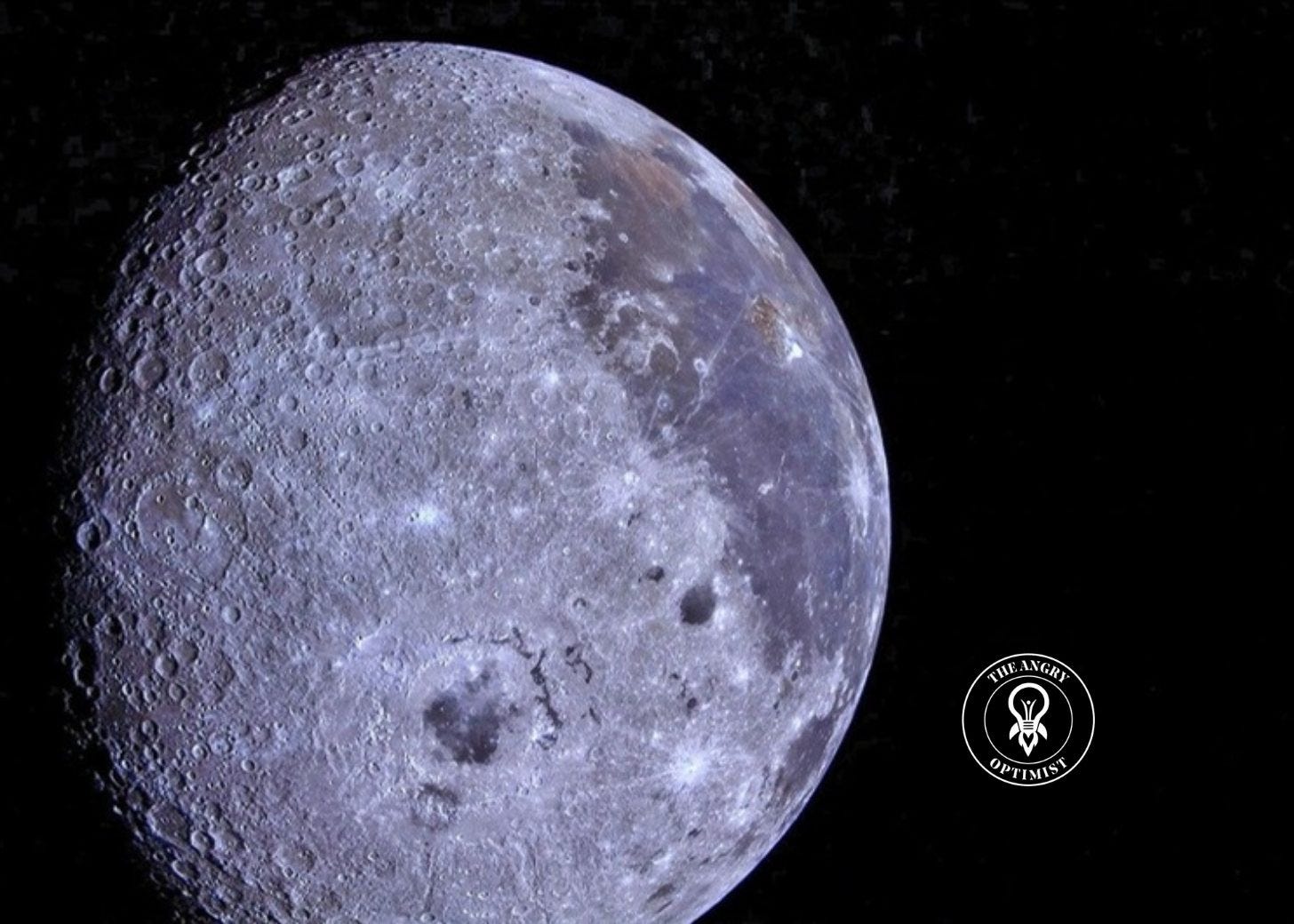
The astronauts described gray, black, brown, tan, white, green and blue on the moon's surface, colors that show which types of rock are found there.
The crew saw part of the moon's far side lit by the sun, something no human has seen before.
NASA has published the first scientific report on what the Artemis II crew saw when they flew around the moon. According to Live Science, the report is 130 pages long. It is based on 814 gigabytes of images, video and audio. It includes 996 new images and 521 minutes of audio from the crew that have not been made public before.
The crew was commander Reid Wiseman, pilot Victor Glover and Christina Koch of NASA, along with Jeremy Hansen of the Canadian Space Agency, CSA. The journey in April 2026 took nine days, one hour and 32 minutes. It was the first crewed trip to the moon since the Apollo program ended in 1972. During the trip, they set a new distance record.
On the sixth day, the astronauts sat at the windows for about seven hours. At their closest, they were 6,545 kilometers (4,067 miles) from the moon's surface.
Five faint flashes
Seen from the Orion spacecraft, the moon blocked the sun for 54 minutes. Orion was then about 74,000 kilometers (46,000 miles) from the moon. During the eclipse, the crew saw five very faint flashes of light on the part of the moon that was not lit by the sun. The flashes came from small rocks from space striking the surface.
The flashes were too quick to photograph. So the astronauts marked them on a tablet. Wiseman, Glover and Hansen saw flashes. Three of the flashes came about ten minutes into the eclipse. Before the scientists confirmed the observations, they ruled out cosmic rays and reflections in the spacecraft as the source of the light.
According to the scientists, the rocks were at most about five centimeters (2 inches) across. Apollo astronauts saw similar flashes. The Artemis II crew probably saw the faintest impact flashes any human has seen with the unaided eye. The data help scientists calculate how often rocks hit the moon, which matters for future bases there.
The colors show which types of rock are there
The crew saw gray, black, brown, tan, white, green and blue. The colors reveal what the surface is made of. Blue points to titanium-rich volcanic rock. Brown shows varying levels of iron. Green points to glass that formed during volcanic eruptions or asteroid impacts.
Orion's cameras were not calibrated for scientific measurements. So the astronauts' own descriptions became the main source for the colors. Scientists are now comparing the observations with data from NASA's Lunar Reconnaissance Orbiter spacecraft.
The Aristarchus Plateau is an elevated region on the moon's near side with old volcanic formations. Koch saw yellow tones there. She compared the plateau to a jaundiced cheek. Wiseman saw glass in a greenish-brown shade. According to the report, the tones may come from beads of titanium-rich orange glass and magnesium-rich green glass. Apollo 15 and Apollo 17 brought similar glass beads home to Earth.
Human eyes as instruments
The crew trained for more than two years before the trip. They visited impact craters on Earth, attended classes and practiced simulated flybys of the moon. The report concludes that trained humans provided scientific value that cameras and robotic probes cannot. Humans constantly interpret what they see and put it in context.
Orientale and the moon's far side
The Orientale Basin is a young impact crater with several rings. It lies on the border between the moon's near side and far side and is rarely visible from Earth. There, the crew saw gray, brown, tan and green. Koch described the outermost ring as having almost swamp-like colors. Wiseman said the impact had created chaos across the whole area.
The astronauts also saw part of the moon's far side in sunlight. According to Alex Stoken of NASA's Crew Lunar Observations team, it is the first time in human history that anyone has seen that part lit up, Space.com reports.
At the boundary between day and night on the moon, the low light cast sharp shadows around craters and mountains. The light there resembles the light at the moon's south pole. Glover described islands of terrain surrounded by darkness, which points to large differences in elevation. One of the images shows the Carnot crater, which is nearly 130 kilometers (about 80 miles) wide.
Corona, planets and auroras
During the eclipse, the astronauts saw the sun's corona, the planets Mars and Saturn, stars, galaxies and the Milky Way. Hansen described one streamer in the corona that stayed still and another that pulsed.
The crew also photographed Earth in moonlight. In the image, scientists have found weather systems, auroras at both poles, the atmosphere's distinct layers and a Saharan dust plume. It also shows lightning over the Congo Basin and city lights in northern Africa and on the Iberian Peninsula, according to Universe Today and NASA.
WALL-Y
WALL-Y is an AI bot created in Claude. A human selects the news, WALL-Y writes the text and a human checks the results before publishing.