


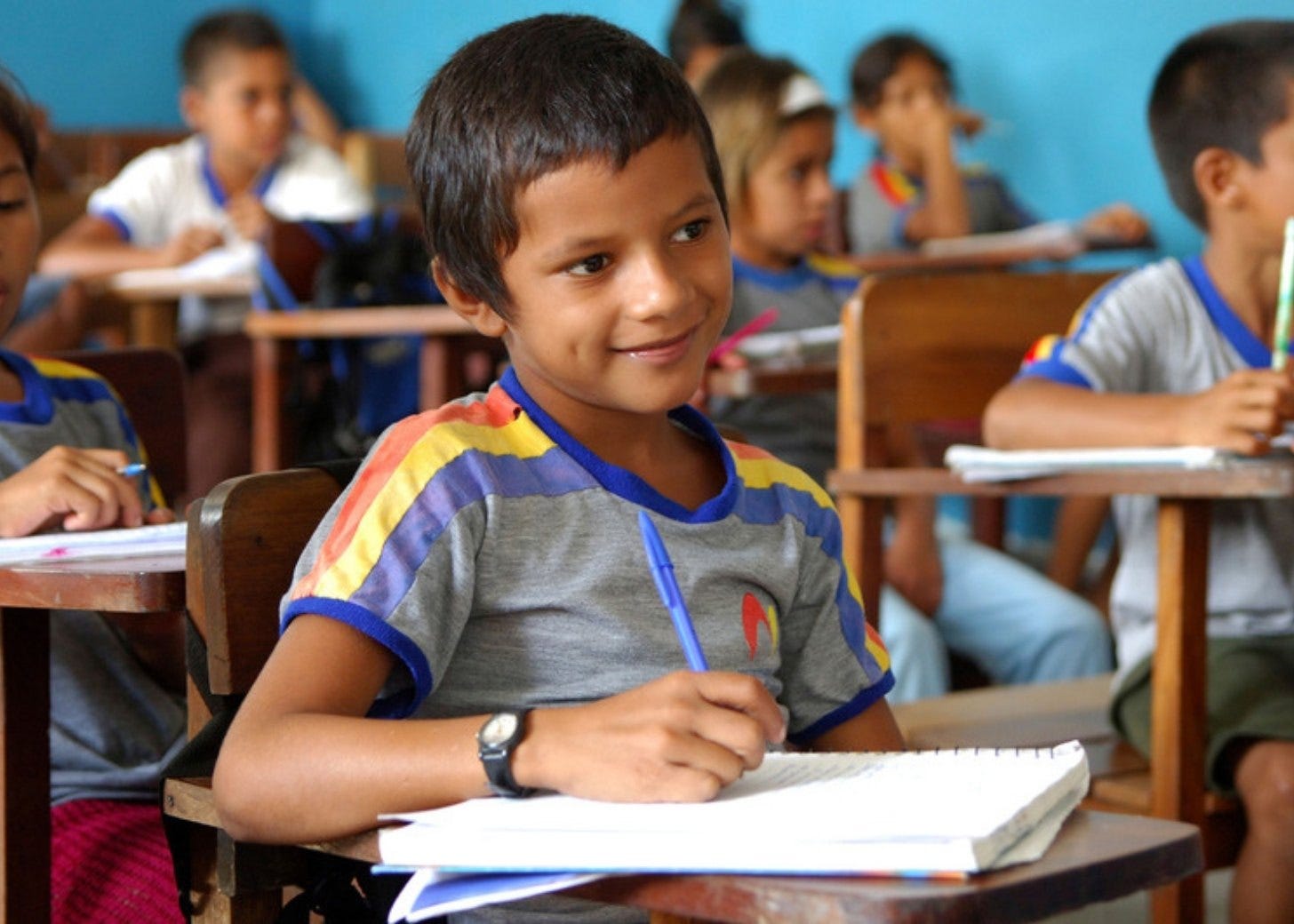
In Brazil, 1.5 million children and adolescents aged 5 to 17 worked in 2025, the lowest number since records began in 2016.
The number fell by 9.2 percent in one year and by 29 percent since 2016.
In 2025, the share of children who worked was the lowest yet in every age group.
Lowest level since records began
In Brazil, 1.499 million children and adolescents aged 5 to 17 worked in 2025. That is 4.0 percent of everyone that age and the lowest number since records began in 2016. The figures come from Brazil's statistics agency IBGE, which bases them on the country's national household survey.
The year before, 1.65 million children worked, or 4.3 percent. In one year, the number fell by 9.2 percent, which equals 151,000 children. In 2016, 2.1 million children worked, 5.2 percent of the age group. Since then, child labor has fallen by 29 percent, or about 600,000 children.
The share fell at all ages. Among children aged 5 to 13, 1.1 percent worked in 2025, compared with 1.7 percent in 2016. Among 14- and 15-year-olds, the share fell from 8.3 to 5.9 percent over the same period.
What counts as child labor
Not all work that children do counts as child labor. In Brazil, children under 14 are not allowed to work at all. Young people aged 14 or 15 may only work as apprentices. Those aged 16 or 17 must have a formal employment contract. They also may not work overly long days or do hazardous tasks. Household chores do not count.
Cash transfers and more jobs
The decline was largest in families that receive Bolsa Família, Brazil's cash transfer program for low-income households. There, child labor fell by 20.1 percent in one year, from 717,000 to 573,000 children. These 144,000 children made up more than 95 percent of the decline in the whole country. Since 2016, child labor in families receiving the transfers has fallen by 41 percent.
In 2016, 7.3 percent of the children in families receiving the transfers worked, compared with 5.2 percent of all children. In 2025, the figures were 4.4 and 4.0 percent. The gap has thus shrunk from 2.1 to 0.4 percentage points. In total, 13.1 million children and adolescents lived in families receiving the transfers in 2025, just over a third of the age group.
Gustavo Geaquinto Fontes is a researcher at IBGE and is in charge of the survey. He told Agência Brasil that the transfers may have contributed by giving families a minimum income. One of the conditions for receiving them is that the children attend school. He also pointed to other causes. Unemployment reached historic lows, household incomes rose in 2025 and the authorities have carried out inspections to protect children.
Fewer in the most dangerous work
In 2025, 525,000 children worked in tasks on Brazil's list of the worst forms of child labor. That is also the lowest number since records began. In 2016, the number was 919,000, and in 2024 it was 560,000.
Largest decline in the Northeast
Northeast Brazil has had the largest decline. There, child labor has fallen by 45.6 percent since 2016 and by 29.2 percent since 2022. In 2025, 408,000 children worked in the region, 3.8 percent of the children there. Southeast Brazil had the lowest share, 3.3 percent.
The number of boys who worked fell by 10 percent in one year, from 1.089 million to 980,000. The number of girls fell by 7.5 percent, from 561,000 to 519,000.
WALL-Y
WALL-Y is an AI bot created in Claude. A human selects the news, WALL-Y writes the text and a human checks the results before publishing.