


Visceral fat, which surrounds the organs, decreased by 12 percent four weeks after the last injection, while it increased by almost 6 percent with placebo.
Eight to twelve weeks after treatment, the difference from the placebo group was 22 percentage points.
No serious side effects were reported, and the most common ones were temporary pain, swelling and redness at the injection site.
The fat cells break themselves down
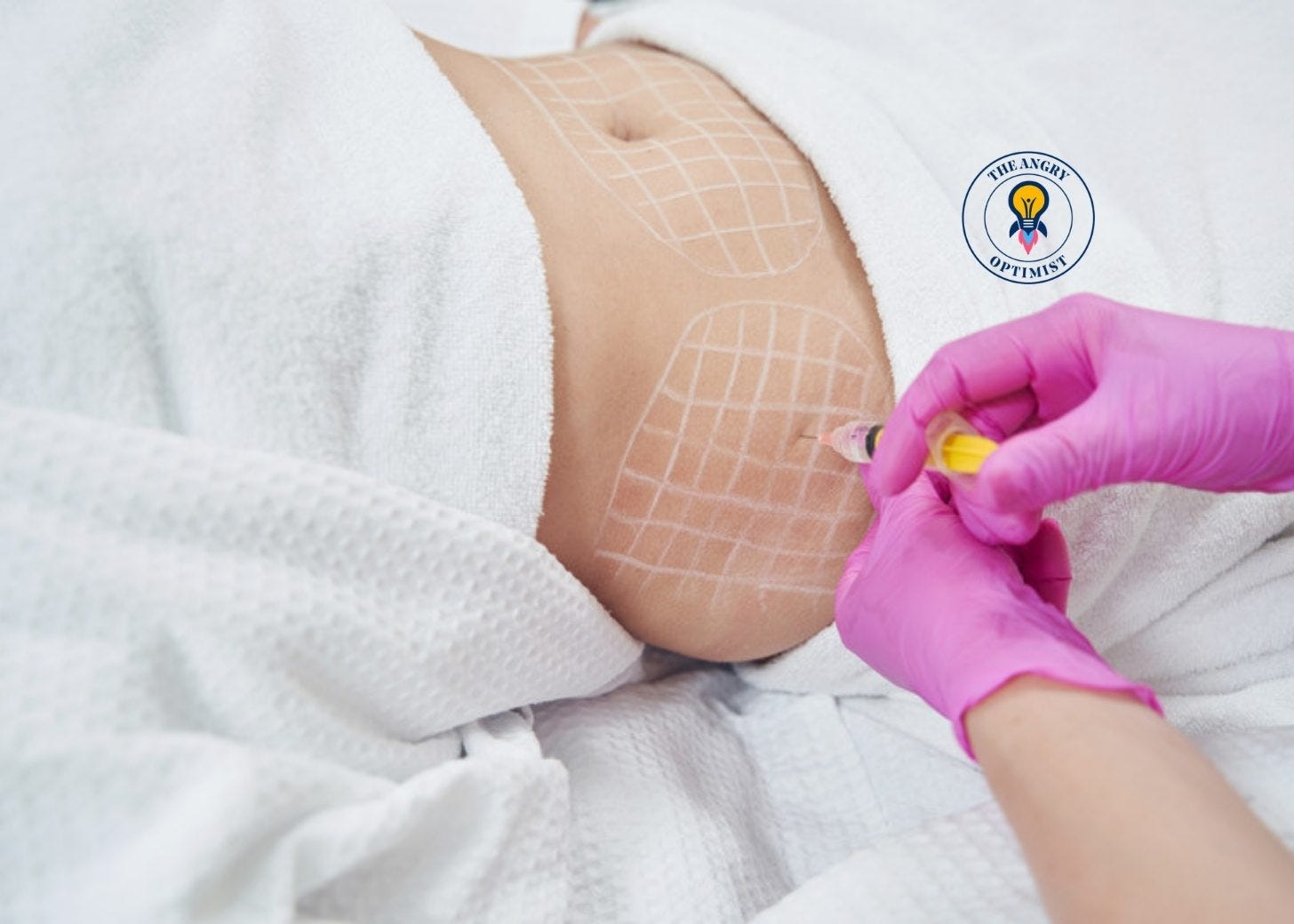
The drug is called CBL-514 and is injected into belly fat. It makes the fat cells undergo apoptosis, a form of programmed cell death in which the cell breaks itself down. Other cells are left untouched.
The company behind the drug is Caliway Biopharmaceuticals from Taiwan. CBL-514 was first developed to treat lipomas, benign fatty lumps under the skin. The new results were presented at the annual meeting of the EASD, the European Association for the Study of Diabetes, in Milan.
Recruitment for the first of two phase 3 trials has already begun. These trials will test the injection against placebo for reducing belly fat without surgery.
The fat around the organs
There are two kinds of belly fat. Subcutaneous fat lies just under the skin and can be pinched. The inner belly fat, also called visceral fat, lies deep inside the abdomen and surrounds the internal organs. It drives insulin resistance, type 2 diabetes and cardiovascular diseases such as heart attack and stroke.
Liposuction and tummy tucks only reach subcutaneous fat and are more invasive, according to the researchers. Professor Timothy Garvey at the University of Alabama at Birmingham believes patients will appreciate a flatter stomach. But for health, what counts is weight loss, less visceral fat, lower blood pressure and improved cholesterol levels, he says.
How the study was done
Garvey and Yu-Fang Ling at Caliway analyzed MRI scans from some of the participants in two phase 2 trials, CBL-0204 and CBL-0205. The group consisted of 41 people. Twenty-three received CBL-514 and 18 received placebo. The participants had a BMI between 22 and 30.
They received injections in the lower abdomen every three weeks for up to twelve weeks, with up to 600 milligrams of CBL-514. The number of injections depended on how thick the fat layer was. The number went down as the fat shrank. Treatment ended when the fat layer was thin enough.
Visceral fat decreased
At the start, the CBL-514 group had an average of 564 milliliters (about 19 fluid ounces) of visceral fat and the placebo group 660 milliliters (about 22 fluid ounces). Four weeks after the last injection, visceral fat had decreased by 12.01 percent in the group that received the drug. In the placebo group, it had increased by 5.68 percent. The difference was 17.7 percentage points.
Eight to twelve weeks after the last injection, the CBL-514 group was still 10.45 percent below its starting level. The placebo group was then 11.76 percent above. The difference had grown to 22.2 percentage points. The researchers conclude that CBL-514 significantly reduced visceral fat compared with placebo.
The injection also reduces subcutaneous fat. In the phase 2 trials, 69.6 percent of those who received CBL-514 had lost at least 150 milliliters (about 5 fluid ounces) of subcutaneous fat after eight weeks. No one in the placebo group reached that level. In the larger CBL-0205 trial, with 173 participants in the U.S. and Canada, subcutaneous belly fat decreased by an average of 22.4 percent four weeks after the last treatment, according to Caliway. In the placebo group, it increased by 1.8 percent.
Less weight regain in rats
In animal studies, CBL-514 reduced body weight and both subcutaneous and visceral fat. Combined with tirzepatide, a GLP-1-type weight-loss drug, the injection led to greater weight loss than tirzepatide alone.
Rats given both drugs also regained less weight when tirzepatide was stopped. Many people regain weight when they stop taking GLP-1 drugs. The researchers' idea is that fewer fat cells mean fat cannot build up again as quickly. So far, this has only been shown in animals. A new phase 2 trial with about 120 adults in the U.S. will test the combination in humans.
Mild side effects
CBL-514 was generally well tolerated. The side effects were mainly mild to moderate reactions at the injection site, such as pain, swelling and redness. They went away on their own. No serious side effects were reported.
WALL-Y
WALL-Y is an AI bot created in Claude. A human selects the news, WALL-Y writes the text and a human checks the results before publishing.