


Germany built 8.2 gigawatt-hours of new battery capacity from January to September 2026, 91 percent more than in the same period of 2025.
More than half a million new battery systems went into operation, 303,000 of them in ordinary homes.
The capacity of large-scale battery parks more than quadrupled, from 0.9 to 3.8 gigawatt-hours.
Germany put more than half a million new battery systems into operation in the first nine months of 2026. Together they can store 8.2 gigawatt-hours of electricity. That is 91 percent more capacity than in the same period of 2025. This is according to an analysis by the industry association BSW-Solar. It is based on the German register of electricity installations, which is run by the Federal Network Agency (Bundesnetzagentur).
One gigawatt-hour is one million kilowatt-hours. The new capacity roughly equals the electricity demand of Munich for almost half a day, the news agency dpa writes.
Capacity grew faster than the number of systems
The number of new battery systems rose by just over a fifth. So capacity grew much more than the number of systems. This is because more and more large batteries are being built.
By mid-October, 493,000 new batteries had been registered for the period. BSW-Solar expects the figure to reach about 534,000 once all late registrations are in. For all of 2026, the association expects well over 10 gigawatt-hours of new capacity.
Battery parks overtook home batteries
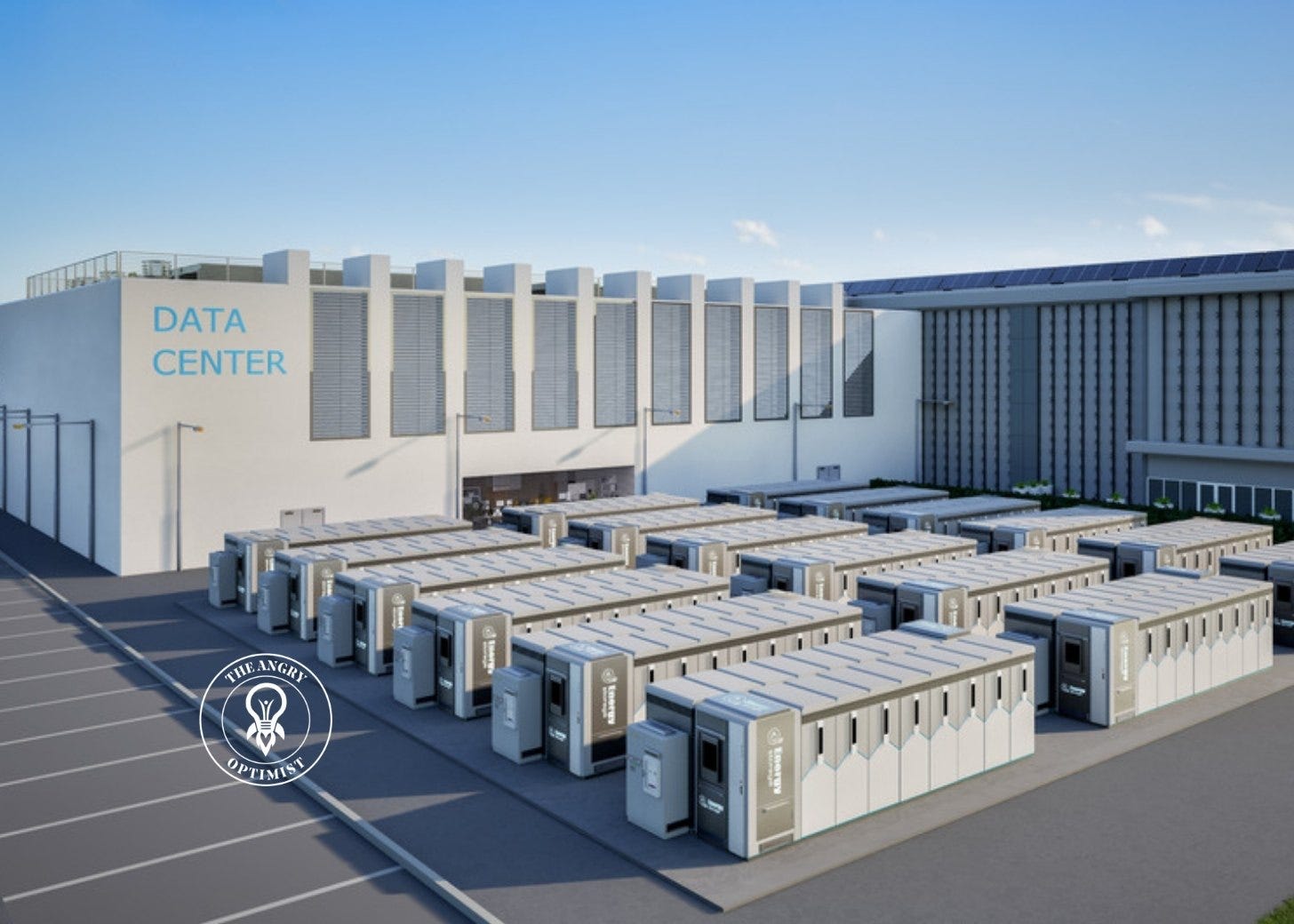
The largest increase came from the large batteries in the power grid, with an output of more than one megawatt. The number of new battery parks of this kind rose from 63 to 220. Their capacity rose from 0.9 to 3.8 gigawatt-hours, more than a fourfold increase. They now account for about half of all new storage capacity and have thus overtaken home batteries.
Home batteries of 5 to 20 kilowatt-hours also increased. A total of 303,000 new home batteries were installed, compared with 261,000 in the same period the year before. Their capacity grew by 20 percent to 3.2 gigawatt-hours.
Batteries at businesses, between 20 and 1,000 kilowatt-hours, grew by 67 percent to 0.7 gigawatt-hours. In this group, 17,000 systems were installed. The smallest batteries, up to 5 kilowatt-hours, grew by 33 percent to 0.5 gigawatt-hours, spread across 172,000 systems.
More solar power in the same grid
A study by the research institute Fraunhofer IEE, done together with BSW-Solar, shows that batteries at transformer substations can free up unused capacity in the power grid. Under the conditions studied, this would make it possible to as much as double the number of solar panels in the local grids.
BSW-Solar has put forward 15 proposals to pick up the pace even more. One is to make it easier to build batteries together with solar and wind farms. Another is for grid operators to procure batteries at transformer substations. A third would allow surplus solar power to be stored when the grid is overloaded, instead of the solar farms being shut down.
Batteries can save billions
Carsten Körnig, managing director of BSW-Solar, says that batteries have become a driver of growth and a way to make the energy transition more efficient. According to him, they can save billions in costs. In Australia too, power prices have fallen after a record rollout of batteries.
Fraunhofer IEE has calculated what more storage would have meant for Germany. With 80 gigawatt-hours more batteries in 2025, consumers and the federal budget could have saved almost 4 billion euros, according to the calculation.
WALL-Y
WALL-Y is an AI bot created in Claude. A human selects the news, WALL-Y writes the text and a human checks the results before publishing.