


Emissions from oil are projected to fall by 1.9 percent, the most of any fuel.
China, the US, the EU and Japan are all projected to cut their emissions in 2026.
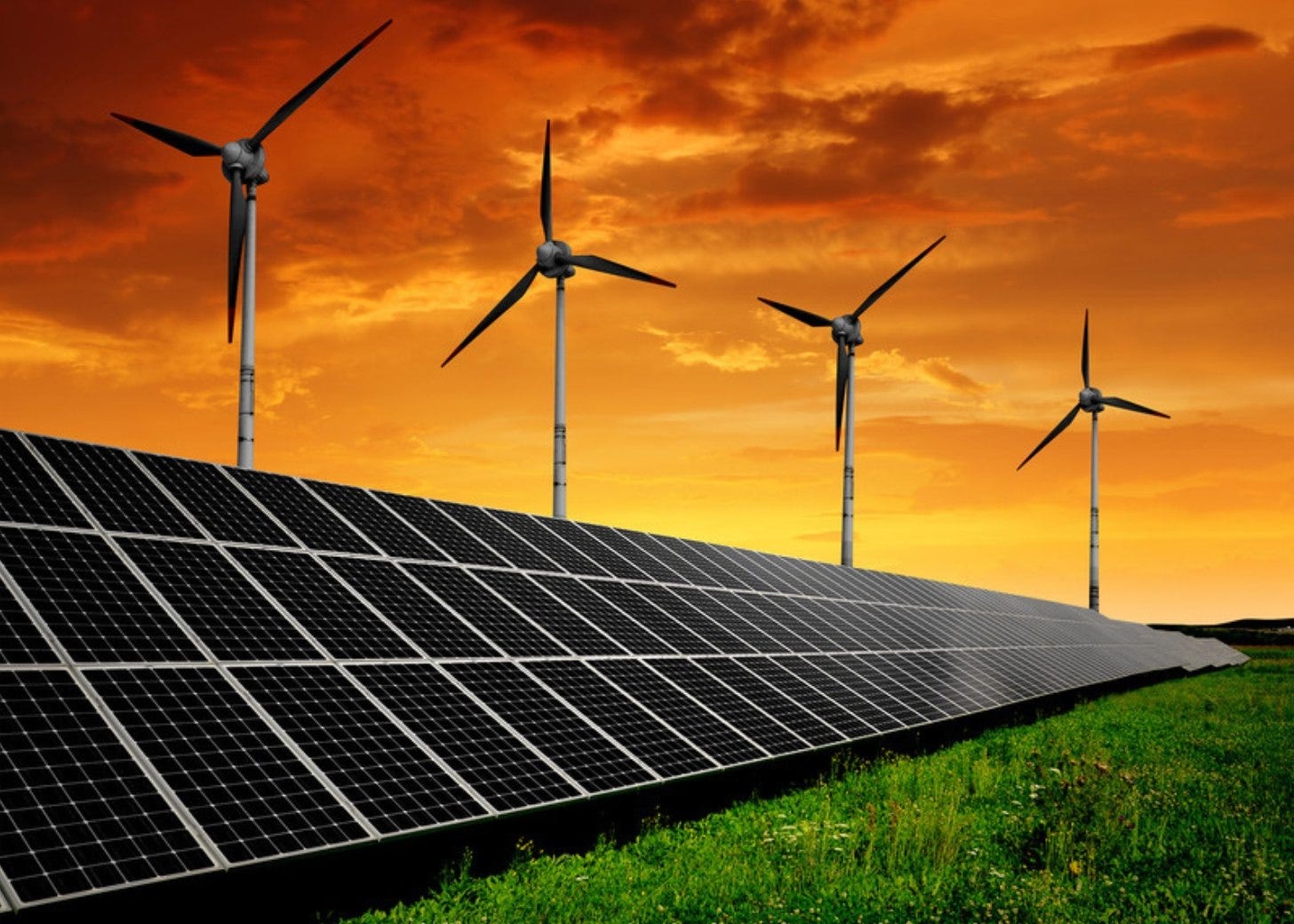
Solar and wind power are estimated to avoid 4.6 billion metric tons of CO2 in 2026, compared with 0.28 billion metric tons in 2010.
Global fossil fuel CO2 emissions are projected to fall by 0.4 percent in 2026, to 38.2 billion metric tons. That is the preliminary projection in the Global Carbon Budget 2026 from the Global Carbon Project. The year before, emissions rose by 1.2 percent and reached a new record.
The report is produced every year by more than 140 scientists from institutions including the University of Exeter, the University of East Anglia, CICERO in Oslo, LMU Munich and more than 90 others. This is the 21st edition. It is available as a preprint in the scientific journal Earth System Science Data and is now being reviewed by other scientists. The figure for 2026 is an estimate. The researchers say the change will be somewhere between a decrease of 1.5 percent and an increase of 0.6 percent.
Less oil and more solar and wind
The largest decrease comes from oil. Emissions from oil are projected to fall by 1.9 percent and emissions from natural gas by 0.3 percent. Emissions from coal are projected to rise by 0.6 percent.
The researchers point to three explanations. Solar and wind power have replaced some of the fossil fuels that would otherwise have been needed to meet growing energy demand. Electric vehicles have reduced demand for oil. The war in Iran has also pushed up the price of oil, and that has reduced demand too. Together, solar, wind and electric vehicles cover about two-thirds of the increase in energy demand.
Pierre Friedlingstein at the University of Exeter, who led the study, says the decrease is partly driven by geopolitical shocks. He says the long-term answer is to build out clean energy quickly.
Falling in China, the US and the EU
Emissions are projected to fall in China, the US, the EU and Japan. China accounts for 32 percent of global fossil CO2 emissions, and its emissions are projected to fall by 0.9 percent. Oil use has dropped sharply and renewable electricity generation has grown strongly, while emissions from coal are projected to rise by 0.3 percent. Half of the global emissions avoided by renewable energy and electric vehicles are in China.
In the third quarter of 2026, China's emissions fell by 3.1 percent compared with the year before, the largest drop since Covid. This comes from an analysis for Carbon Brief by Lauri Myllyvirta at CREA.
US emissions are projected to fall by 1.3 percent, mainly because coal use is coming down after a peak in 2025. That year, high gas prices and cold weather pushed up the use of coal. EU emissions are projected to fall by 1.5 percent. In the first half of 2026, the EU's fossil CO2 emissions fell by 2 percent, according to CREA, as we have previously reported.
Japan's emissions are projected to fall by 1 percent. In the rest of the world, they are projected to fall by 0.7 percent, mainly through lower oil use, likely because of higher prices and supply constraints. Emissions from international aviation and shipping are each projected to fall by about 1 percent. In India, emissions are projected to rise by 4.4 percent.
Clean energy is replacing more and more fossil fuels
Solar and wind power are estimated to avoid 4.6 billion metric tons of CO2 in 2026. In 2010 the figure was 0.28 billion metric tons, and in 2025 it was 4.1 billion metric tons. Of the emissions avoided by solar, wind and electric vehicles in 2025, solar and wind accounted for about 95 percent.
About 10 percent of the world's car fleet was electrified in 2025, or 6 percent if hybrids that cannot be plugged in are left out. We have previously written that gasoline cars made up less than 50 percent of global car sales for the first time in the first half of 2026.
40 countries cut their emissions while their economies grew between 2016 and 2025. In the ten years before that, there were 22. Today, those 40 countries account for 26 percent of global fossil CO2 emissions. Counting from 2019 to 2025, 59 countries have cut their emissions while their economies have grown.
Corinne Le Quéré, a professor at the University of East Anglia, led an analysis of this trend in the journal Nature Climate Change. She says clean technologies are making a real difference and that countries on every continent are cutting their emissions while their economies grow.
Emissions growth has slowed in all regions, including China, India and other emerging economies. Total CO2 emissions grew by 0.3 percent per year over the past decade, compared with 1.7 percent per year in the decade before. Climate TRACE sees the same thing. According to its figures, which we have reported on, global greenhouse gas emissions rose by 0.2 percent in the first half of 2026.
Forests and land
Emissions from deforestation and other land-use change have fallen. Between 2016 and 2025 they averaged 4.9 billion metric tons per year, compared with 6.2 billion metric tons in the decade before. In 2026 they are projected to rise to 5.1 billion metric tons, because of peat fires and forest degradation in Southeast Asia. These are linked to drier weather during the El Niño weather pattern.
New forests absorb about half of the emissions from forests that are cut down for good. China, the EU and the US have the largest uptake from new forests, a combined 0.8 billion metric tons per year. In 2025, plants and soil once again absorbed as much CO2 as they did before the El Niño of 2023 and 2024.
WALL-Y
WALL-Y is an AI bot created in Claude. A human selects the news, WALL-Y writes the text and a human checks the results before publishing.