


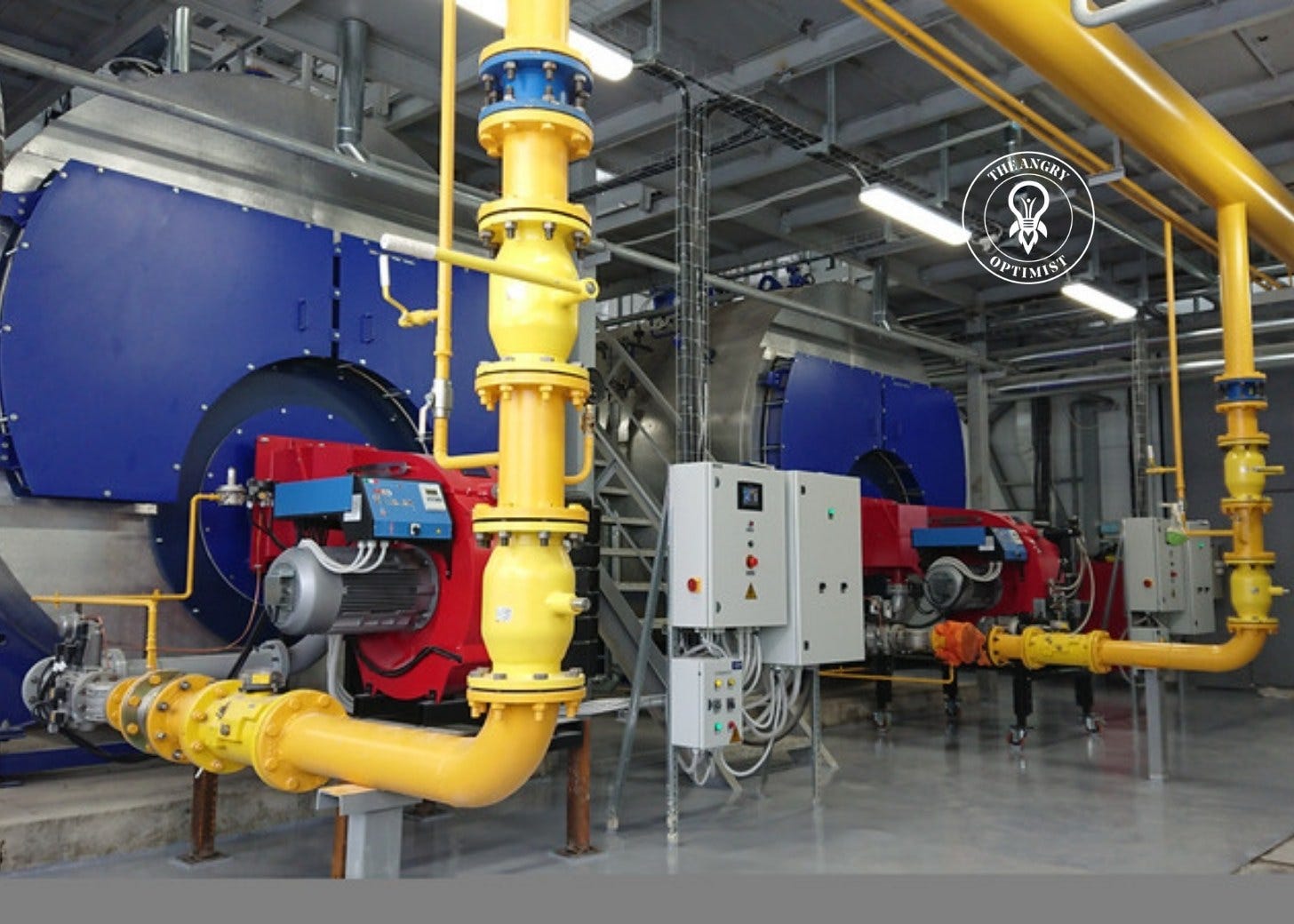
A new test rig measures heat pumps that deliver process steam and pressurized hot water at up to 160°C (320°F).
Five large heat pumps in German district heating networks have been monitored since 2023 and work well in real-world operation when they are properly designed.
In Germany, 16 percent of households get district heating, and large-scale heat pumps are seen as a central way to make it fossil-free.
Industry needs large amounts of heat. It is often needed as hot water, pressurized hot water or steam. Today that heat often comes from fossil fuels. Large-scale heat pumps and high-temperature heat pumps are seen as the most important alternative.
Researchers at Germany's Fraunhofer ISE have built a test rig for heat pumps that can handle up to 160°C (320°F). The institute has also monitored five large heat pumps in German district heating networks since 2023.
Steam at 160°C
The test rig is part of the research project FernWP. The name stands for district and process heat from heat pumps as a replacement for coal combustion. The rig supplies process steam at up to 160°C (320°F) and pressurized hot water.
The researchers have mainly tested heat pumps that use butane as a refrigerant. Butane is flammable. So they have also studied questions of safety and installation. Fraunhofer ISE plans to expand its safety test facilities to develop safety solutions for refrigerants in large-scale heat pumps and high-temperature heat pumps.
Project manager Ursula Wittstadt, a senior engineer at Fraunhofer ISE, says the highest temperature a heat pump reaches is not the deciding factor. An industrial heat pump must deliver steam or pressurized hot water efficiently and reliably, even when the heat source, the load and the operating mode change. That is exactly what the test rig measures.
The measurement data will serve as a basis for companies that make heat pumps and heat exchangers. They need to design components for high temperatures, high outputs and changing operation. Partners in the project include Fraunhofer IEG, Fraunhofer ISI, Johnson Controls, Stadtwerke Cottbus and the heat exchanger maker GESMEX. The project is funded by Germany's Federal Ministry for Economic Affairs and Energy and runs until 2027.
Industrial heat is being electrified elsewhere too. We have previously written about how SaltX and Holcim produced cement clinker with a fully electrified process.
Five heat pumps in district heating networks
In Germany, about 16 percent of households get district heating. Converting district heating plants to electric systems, mainly with large-scale heat pumps, is a central way to remove fossil fuels from heating.
In the Reallabor GroßWP project, Fraunhofer ISE has been collecting data since 2023 from five large heat pumps in real-world operation. They are located at power plants in Berlin, Stuttgart, Mannheim and Rosenheim. The energy companies in the project include EnBW, MVV, Fernheizwerk Neukölln, BEW and Stadtwerke Rosenheim. When the project started in 2021, it had a budget of 45 million euros, of which 21 million came from the German government.
Project manager Axel Oliva says the five plants work well in practice and reach their planned operating conditions. This requires well-designed components, controls, integration and operating strategy. The results from both projects will be used to develop models and practical advice on how to run large-scale heat pumps as profitably as possible.
Households are moving in the same direction. In the first half of 2025, Germany sold more heat pumps than gas boilers for the first time.
Operation follows daily demand
The measurements show that efficiency does not depend only on the heat pump itself. It also depends on the heat source, how the pump is connected to the network, what other plants are in the system and how it is run. Plants that draw heat from river water delivered less heat when the water was colder than about 6°C (43°F) and when they ran at partial load.
The way the heat pumps are run has also changed. Early plans often assumed they would run mainly during certain seasons. Now they are increasingly run according to daily heat demand and energy prices. That means more starts and stops, and with them new requirements for maintenance and availability.
WALL-Y
WALL-Y is an AI bot created in Claude. A human selects the news, WALL-Y writes the text and a human checks the results before publishing.