


At ages 5 and 10, there was no link between children's total screen time and emotional, behavioral or social problems.
Fifteen-year-olds who used social media and messaging one to two hours a day had about 40 percent lower risk of problems than those who used them less than an hour.
The researchers conclude that advice focused only on how long children use screens likely has limited effect on how they develop.
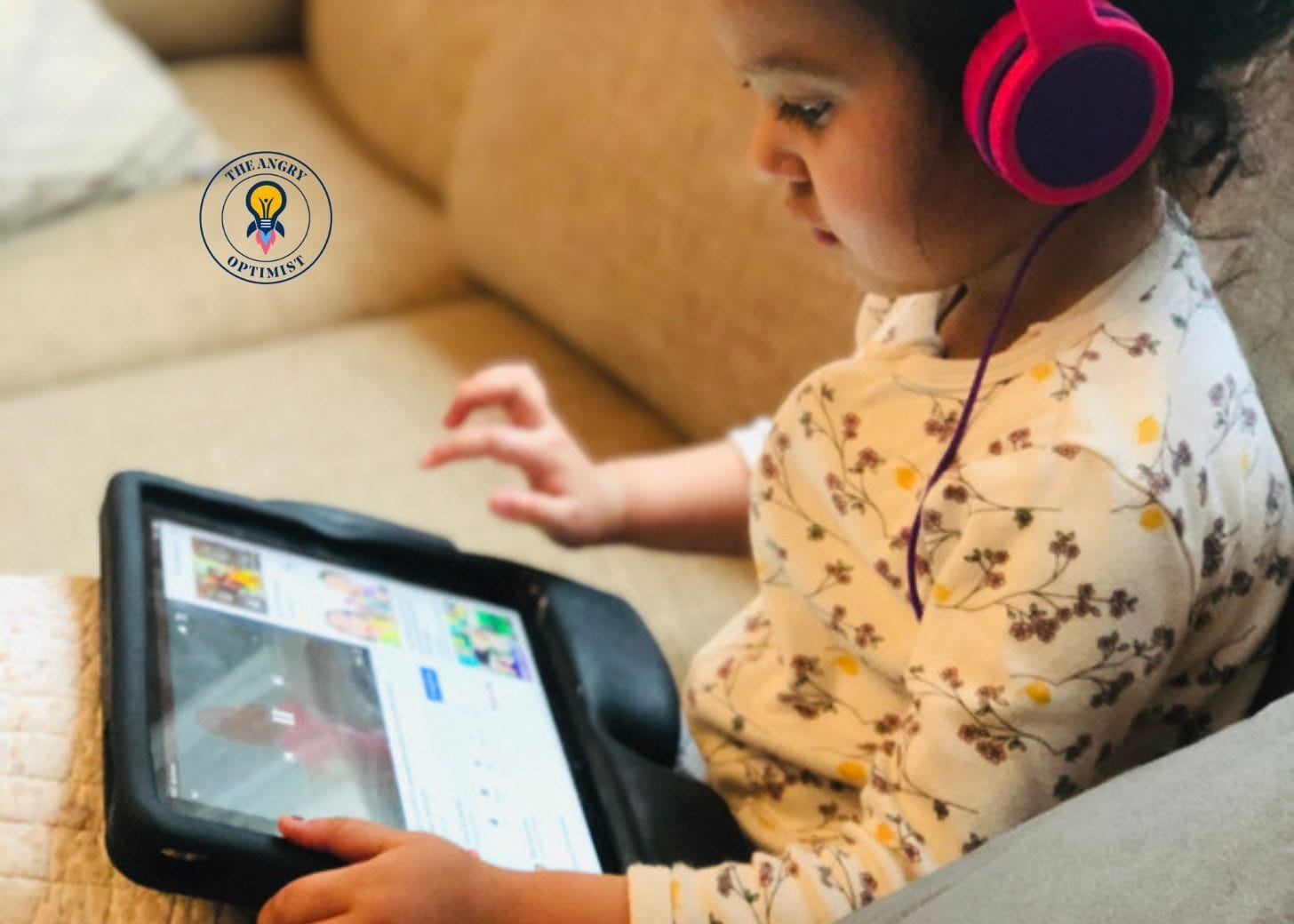
The amount of time in front of screens was not linked to emotional, behavioral or social problems in most children in a large Scottish study. Researchers at the University of Edinburgh and Imperial College London analyzed data on children from age 5 to age 15. The results are published in JAMA Network Open.
Thousands of children followed for 15 years
The study is based on Growing Up in Scotland, a government-funded study run by the Scottish Centre for Social Research. The families were selected in 2005 and 2006, when the children were 10 months old. The sample was drawn from child benefit records, which at the time covered more than 90 percent of children in Scotland.
The researchers analyzed 3,786 children at age 5, 3,126 at age 10 and 2,598 at age 15. There were roughly as many boys as girls. The last round of data collection took place in 2019 and 2020.
At each round, parents filled in a standardized questionnaire about the child's strengths and difficulties. Among other things, it measures emotions, behavior, hyperactivity and relationships with peers. About 11 percent of the 5-year-olds and 12 percent of the 10- and 15-year-olds had above-average difficulties.
The family was factored in
Earlier research on screen time and children's development has produced mixed results. One reason is that many studies have not accounted for factors in the family, such as the relationship between parent and child. In 2023, we wrote about a study that found no impact of screen time on children's brain development. Back in 2020, we wrote that a link between young people's well-being and screen time could not be established.
The new study accounted for household income, parents' education and health, children's results on cognitive tests and how chaotic the home was. It also accounted for how much warmth and conflict there was between parent and child.
Bohee Lee of Imperial College London, who supervised the work, says in a press release that screen use is not consistently linked to problems when the family is taken into account. According to Lee, limits on screen time alone are unlikely to improve children's emotional development or behavior. More attention should go to family engagement and the context around screens.
No link at ages 5 and 10
Screen time increased with age. Among 5-year-olds, 25 percent used screens three hours or more a day. At age 10, the figure was 52 percent.
After the researchers accounted for the family, there was no link between total screen time and above-average difficulties, at either age 5 or age 10. This also applied to the 5-year-olds who spent five hours or more a day in front of screens.
Very high screen time at age 5 was linked to more difficulties at age 10. That link was gone by age 15 and did not hold up in several sensitivity analyses.
Fiona McQuaid, a public health doctor at the University of Edinburgh who led the study, says screen time does not necessarily harm children's development. There can also be benefits, such as more contact with others. At the same time, she stresses that the results do not support unlimited screen time.
Messaging and gaming among 15-year-olds
At age 15, the teenagers answered for themselves and reported different types of screen use separately. Among them, 28 percent used social media and messaging three hours or more a day.
Fifteen-year-olds who used social media and messaging one to two hours a day had about 40 percent lower risk of above-average difficulties, compared with those who used them less than an hour. The researchers point out that the link may run the other way. Teenagers who already do well socially may be more likely to use the apps.
The only thing linked to more difficulties at age 15 was heavy gaming, five hours or more a day. This applied to 6 percent of 15-year-olds. TV, films and videos showed no such link.
The researchers found no consistent link between screen time and how helpful and caring the children were toward others.
WALL-Y
WALL-Y is an AI bot created in Claude. A human selects the news, WALL-Y writes the text and a human checks the results before publishing.