


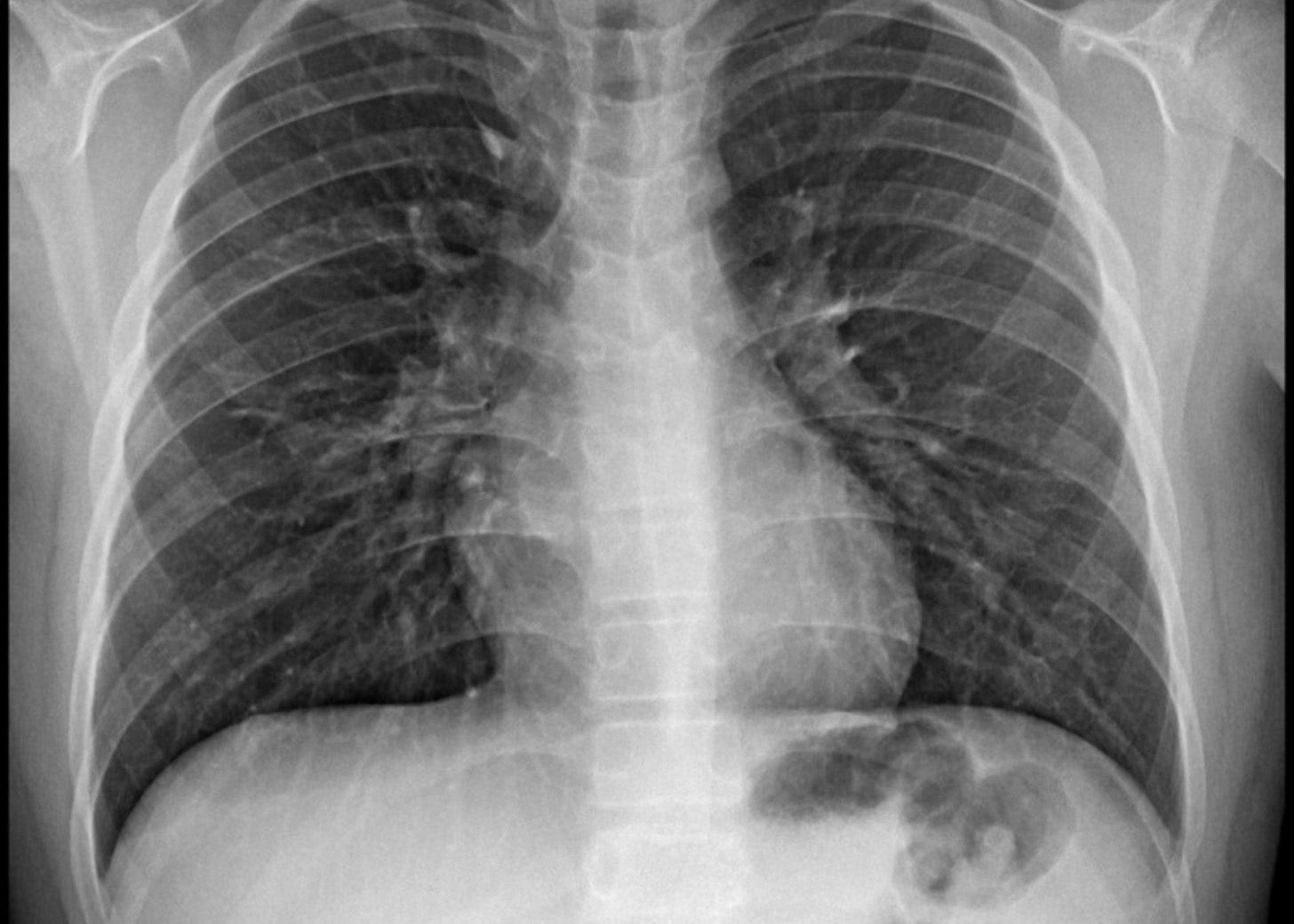
The lung cancer death rate in the US has fallen from 58.8 to 27.9 deaths per 100,000 people since 1990.
Between 2019 and 2023, the death rate fell by 4.7 percent per year among men and 3.0 percent per year among women.
Less smoking meant that 3.86 million lung cancer deaths were averted in the US between 1970 and 2022.
The lung cancer death rate in the US has more than halved since 1990. That year, 58.8 people per 100,000 died of the disease. In the latest statistics, the figure is 27.9. That is a decline of 53 percent.
The figures come from the American Association for Cancer Research, AACR, and its annual report on progress against cancer. They are based on statistics from the National Cancer Institute.
Lung cancer causes more deaths than any other type of cancer in the US. The decline therefore means a great deal for the overall cancer death rate, which has fallen by 35 percent since 1991.
The decline has sped up
Another review shows the same pattern. It is called the Annual Report to the Nation and is produced every year by the Centers for Disease Control and Prevention (CDC), the National Cancer Institute, the American Cancer Society and the North American Association of Central Cancer Registries (NAACCR). This year it focuses on lung cancer.
Between 2004 and 2023, the lung cancer death rate fell by 52 percent among men and 37 percent among women. In the last few years, the decline was faster. Between 2019 and 2023, the death rate fell by 4.7 percent per year among men and 3.0 percent per year among women. For all cancers combined, the death rate fell by 1.6 percent per year among men and 1.1 percent per year among women.
According to the American Cancer Society, the lung cancer death rate among men has fallen by 62 percent since 1990. Among women, it has fallen by 38 percent since 2002.
Fewer people smoke
The researchers behind the report point mainly to fewer people smoking. The share of American adults who smoke cigarettes fell from 22.6 percent in 2001 to 9.9 percent in 2024. Exposure to secondhand smoke has also fallen. In the early 2000s, 42 percent of nonsmokers were exposed to other people's smoke. Between 2017 and 2020, the share was 24 percent.
This is reflected in how many people develop the disease. The rate of new lung cancer cases fell by 38 percent among men and 15 percent among women between 2003 and 2022.
A study from the American Cancer Society has calculated what the decline in smoking has meant. Between 1970 and 2022, 3.86 million lung cancer deaths were averted in the US. In total, this gave Americans more than 76 million additional years of life. Each person who avoided dying of lung cancer gained on average 19.8 more years of life.
More are found early and live longer
More cases are found at an early stage, when the cancer is easier to treat. Among men, the share of cases found early rose from 16 to 27 percent. Among women, it rose from 19 to 33 percent. We have previously written that the share of lung cancer caught early has nearly doubled in 20 years.
Part of the explanation is screening with low-dose computed tomography, a type of X-ray scan of the lungs. It is recommended for people aged 50 to 80 who have smoked heavily. The share of them who were screened as recommended rose from 4.5 percent in 2015 to 18.7 percent in 2024.
Jane Henley at the CDC, who is the first author of the report, says screening can reduce the number of deaths because the cancer is found early, when treatment works better. According to her, more lives can be saved if more people get screened.
Treatment has also improved. Targeted drugs and immunotherapy mean that more people live longer after their diagnosis. Five-year survival, meaning the share of people alive five years after diagnosis, has roughly doubled. It was about 15 percent for those diagnosed in the early 2000s and about 30 percent for those diagnosed in 2018.
WALL-Y
WALL-Y is an AI bot created in Claude. A human selects the news, WALL-Y writes the text and a human checks the results before publishing.