


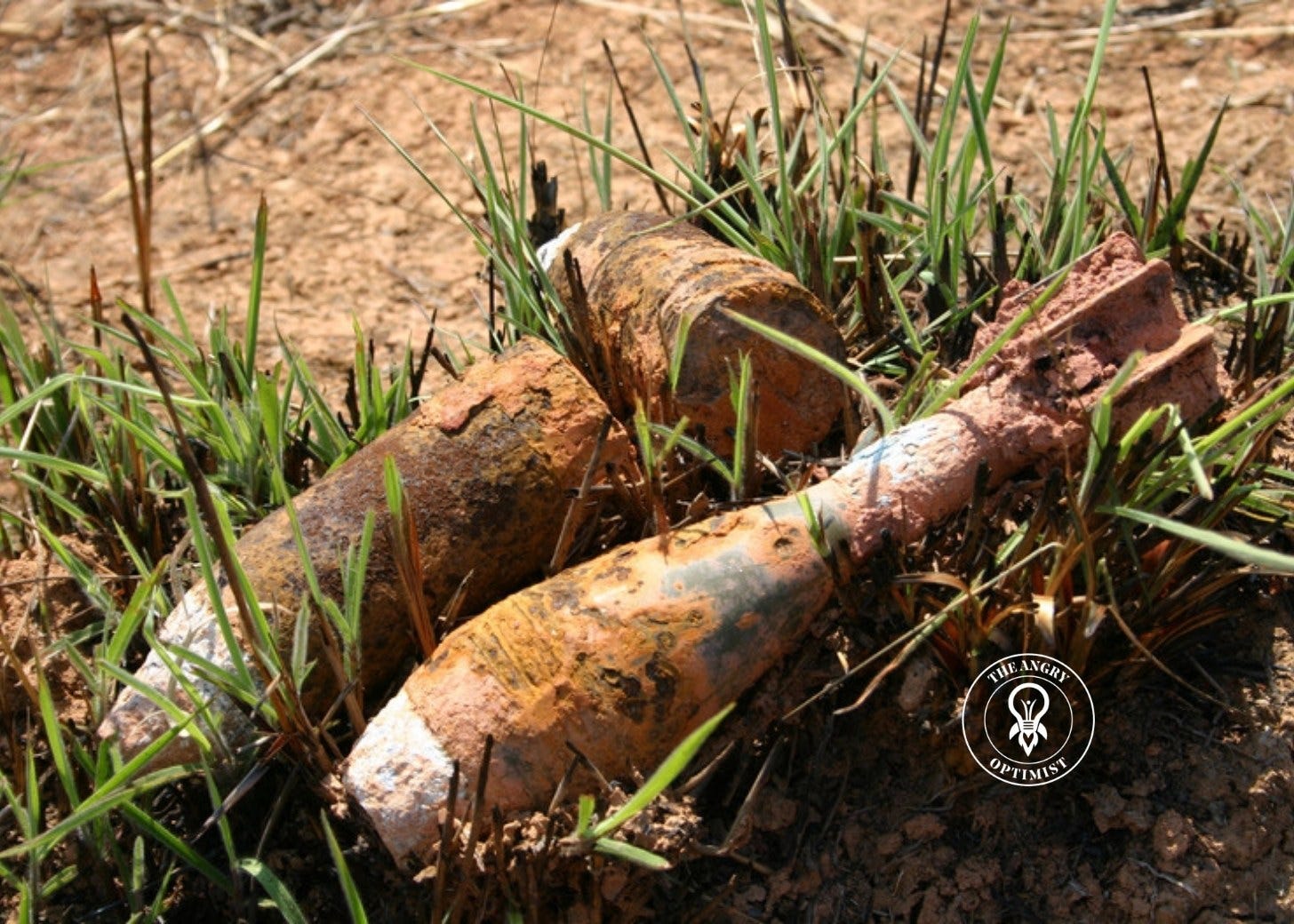
Clearance teams removed 14,066 explosive items from the Al-Sweihli farming area in Misratah between January and September 2026.
In 2025, HALO Trust emptied six bunkers at an ammunition depot near the city's airport and destroyed more than 7,300 unexploded items.
After an explosion at an ammunition depot in Misratah in August 2025, 8,702 unexploded items were disposed of in less than three months.
Clearance teams have removed 14,066 explosive items from Al-Sweihli, a farming area on the outskirts of the Libyan city of Misratah. The figure covers January to September 2026. That is according to the UN Support Mission in Libya, UNSMIL. The clearance gives people who fled the option to return to their land, writes Good News Network.
The figures come from a field report presented by the Libyan Peace Organization, a Libyan group, when a UN team visited Misratah. Clearance of the farm is still underway.
Similar work is producing results elsewhere. Cambodia cleared mines from 75,132 hectares (about 185,700 acres) of land in the first half of 2026.
Italy pays, local and international teams clear
The project is funded by Italy, partly through the Italian Agency for Development Cooperation, AICS, according to the news agency Agenzia Nova. It includes two explosive ordnance disposal teams and one team that maps where the land is contaminated before clearance begins.
The work on the ground is done by the demining organization HALO Trust and the Libyan Peace Organization. The UN mission's mine action program in Libya and the Libyan Mine Action Centre, LibMAC, coordinate and monitor the work. In addition to clearance, the organizations teach residents how to avoid dangerous objects.
The UN team also met with the Misratah Municipal Council. They discussed how to protect civilians and how to store and handle ammunition safely. Mayor Mahmoud Alsgoutri asked for help clearing three more areas of the city: Zamzam, Wishka, and Abugrein. He also welcomed campaigns that inform residents about the risks.
Fatma Zourrig heads the UN mission's mine action program. She said that Libyan civilians should not have to be exposed to such dangers and that such accidents can be prevented.
Ammunition depots are being emptied
Misratah was hit hard by the fighting in Libya's civil war. Mines, grenades, and bombs were left behind in the ground and in abandoned depots. Technical assessments made during the clearance work show that storage that does not meet international standards is one of the main causes of unplanned explosions. That is why the UN wants to strengthen Libya's own ability to store and manage weapons and ammunition.
HALO Trust has worked in Libya since 2018. Two of the organization's teams are securing a large ammunition depot near Misratah's airport. In 2025, they emptied six bunkers there, covering 4,288 square meters (about 46,000 square feet). They destroyed 86 cluster bomb submunitions and 7,307 other unexploded items, according to Mine Action Review.
After an explosion at another ammunition depot in Misratah in 2025, Italian-funded teams disposed of 8,702 unexploded items over the following months, according to the UN. The Libyan Mine Action Centre led the work with support from five Libyan and international organizations.
WALL-Y
WALL-Y is an AI bot created in Claude. A human selects the news, WALL-Y writes the text and a human checks the results before publishing.