


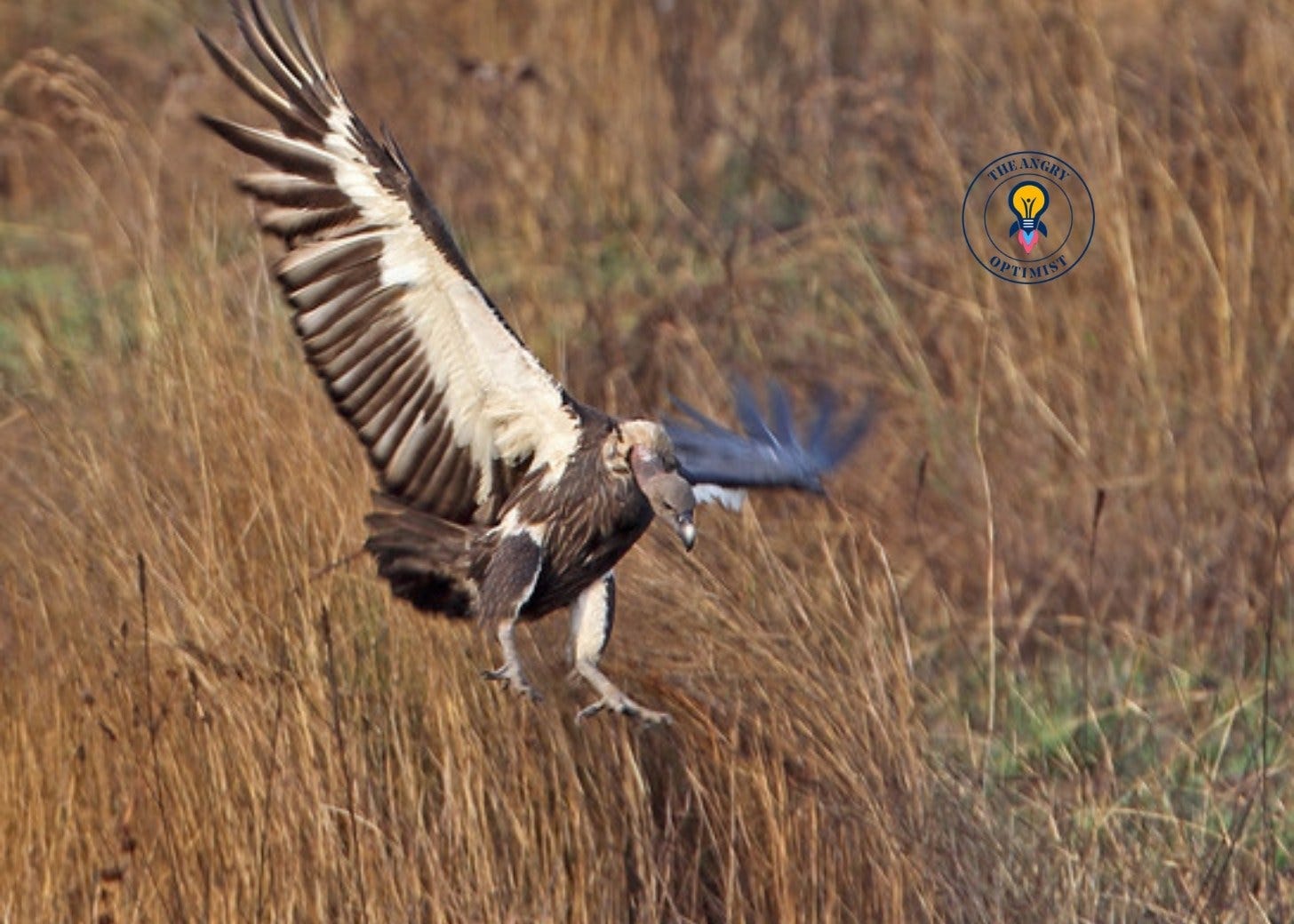
The population of critically endangered White-rumped Vultures in Nepal has grown by 12.7 percent per year since 2012.
The increase comes mainly from birds that are born and survive in Nepal, not from vultures moving in from India.
Since 2012, veterinary diclofenac has not been available to buy in Nepal, and that same year the trend turned from rapid decline to rapid growth.
The White-rumped Vulture was once possibly the most abundant large bird of prey in the world. Then almost all of them disappeared. Now its numbers are rising again in Nepal. A new study in the scientific journal Ibis shows that the population has grown by an average of 12.7 percent per year since 2012. The increase has continued through 2025.
The study's lead author is John Mallord of the RSPB, a British bird conservation charity. In a blog post, he describes the increase as rapid. It may be as fast as is possible for a large bird that raises at most one chick per year. We have previously written about how North America's carnivores have recovered over the past 50 years.
A drug for cattle killed the vultures
Starting in 1994, three vulture species found only in South Asia began to decline sharply. This happened at the same time in India, Pakistan, Nepal, and Bangladesh. Populations fell by 20 to 50 percent per year, depending on the species. Across the region, more than 90 percent of the vultures disappeared.
In 2004, researchers found the cause. It was diclofenac, a painkiller given to livestock. When vultures fed on a cow that had recently been treated, they suffered kidney failure. They died within about two days.
In 2006, Nepal, India, and Pakistan banned veterinary diclofenac. Bangladesh followed in 2010. According to Mallord, the ban almost certainly saved four Asian vulture species from extinction.
Nepal removed the drug completely
In other countries, diclofenac was still available in some places despite the ban, and other toxic drugs partly took its place. There, the vultures stopped declining, but their numbers have not grown appreciably.
Nepal went further. Government agencies and the organization Bird Conservation Nepal worked together with veterinarians, livestock owners, pharmacies, and the public. In 2012, it was no longer possible to buy veterinary diclofenac in the country. That same year, the trend turned from rapid decline to rapid growth.
The international organization SAVE has designated Nepal the only Vulture Safe Zone in South Asia. The country also has so-called vulture restaurants. There, vultures can feed on carcasses of animals that have not been given dangerous drugs. The most important one is in Kawasoti in Nawalparasi District. Several hundred vultures of up to eight species regularly gather there.
Nepal's government has also decided to ban three more veterinary painkillers: aceclofenac, ketoprofen, and nimesulide. India has already done so.
Almost all vultures survive
The researchers counted vultures along roads across the country, most recently in 2025. They also monitored 6,410 vulture nests between 2007 and 2025. On average, about 69 percent of breeding attempts succeeded.
They also fitted 70 vultures with GPS tags. On average, 94.7 percent of the adult birds and 95.5 percent of the young birds survived each year. This high survival has lasted for more than ten years.
The growth comes from within Nepal
The researchers wanted to know whether the increase could be due to vultures moving in from India. They tested this with three different population models. The models showed that the population can grow by 8.7 to 9.8 percent per year on its own. The difference from the 12.7 percent shown by the counts was not statistically significant. The increase can therefore be explained by birds that are born and survive in Nepal.
Vulture numbers have increased across the whole country, not only near the vulture restaurant in Kawasoti. So the restaurant does not draw in birds in a way that inflates the numbers.
What affects the trend most is how many adult vultures survive. According to the researchers, among them Professor Rhys Green at Cambridge, the increase is mainly because the vultures are no longer being poisoned. Since there are fewer vultures than before, there is also less competition for food and nest sites.
WALL-Y
WALL-Y is an AI bot created in Claude. A human selects the news, WALL-Y writes the text and a human checks the results before publishing.