


By Ulrika Gerth

Summary
📉 What people are wrong about
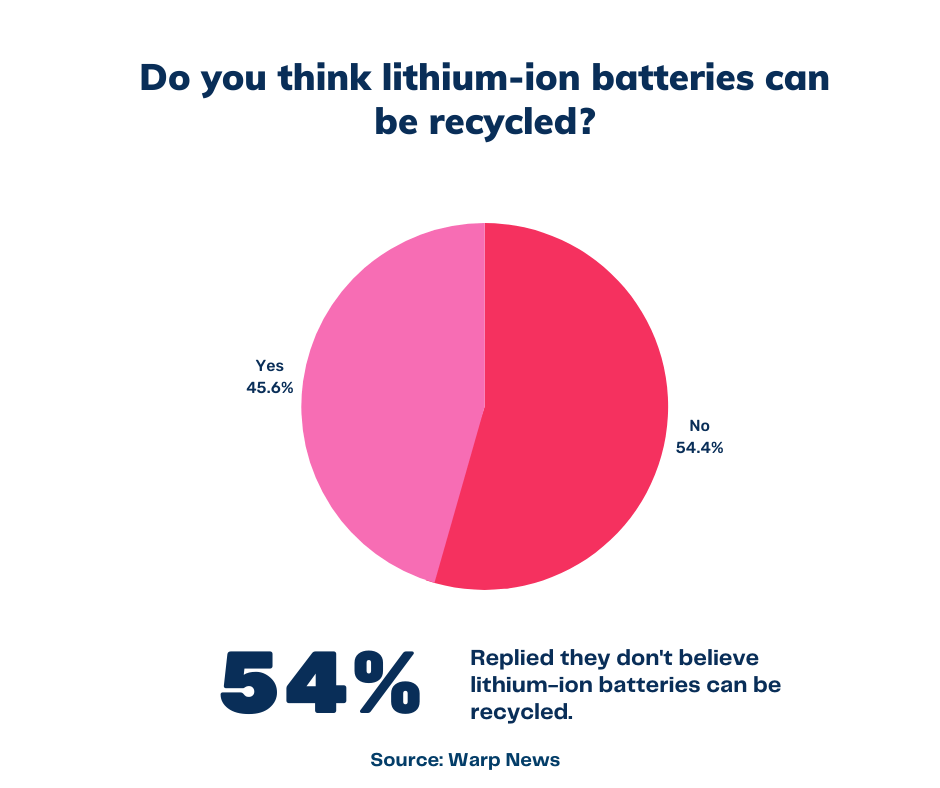
Despite the growing popularity of electric vehicles (EV), not everyone is quite willing to believe they are good news. Our survey found 54% of respondents think lithium-ion batteries can’t be recycled. But amid the doomsday headlines that EVs are about to set an environmental calamity in motion, there is progress, a lot of it.
📈Here are the facts
At least 95% of lithium-ion battery materials can be recycled. Just visit Redwood Materials, a trailblazing company leading the charge to turn EV batteries and electronic devices into a sustainability advantage. And it’s far from alone.
💡 Optimist’s Edge
The recycling market is about to take off. As the number of spent lithium-ion batteries surge to the tune of increasing EV sales, the need to recover their valuable materials will, over the next decade, become big business — and you can be part of building and financing this growing industry.
👇 How to get the Optimist’s Edge
When an industry springs from almost nowhere in a matter of years, opportunities open up. From new career options to investments in companies that many of your peers likely have not kept track of.
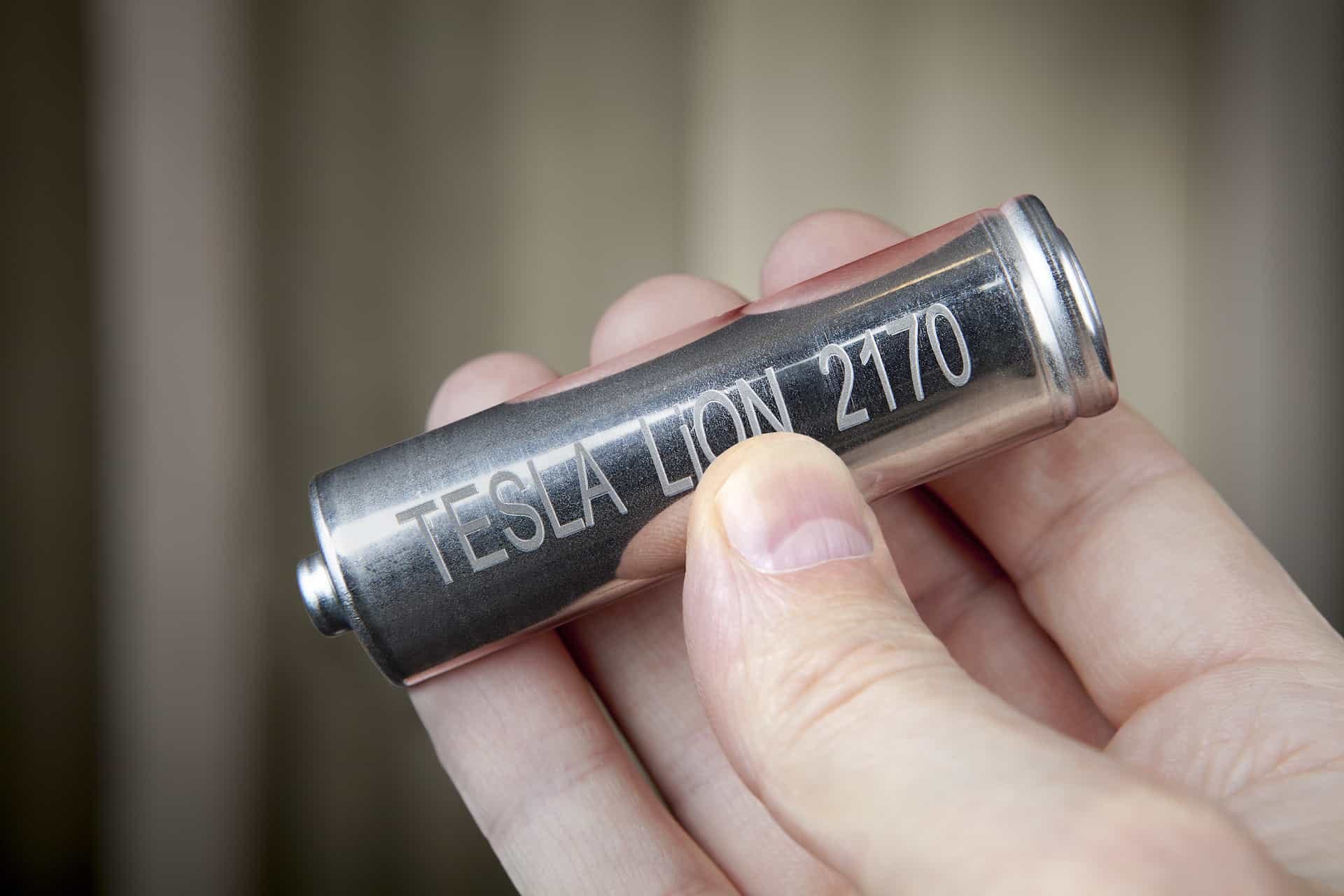
📉 What people believe about lithium-ion battery recycling
Try touting the promise of electric vehicles and chances are someone will attempt to give your optimism a quick beating: “But what about those batteries?”
The public perception that lithium-ion batteries, especially the 1,000-pound kind used to power electric cars, are slow-walking the world into environmental disaster, is widespread. Sure, the skeptics may say, it’s great EVs can replace gas-guzzlers, but what good does it do when those old batteries are burning up in incinerators and we’re forced into a destructive cycle of resource-intensive mining?
Our survey respondents echoed that thought — more than half, or 54%, replied they don’t think lithium-ion batteries can be recycled. Their skepticism is hardly surprising. News stories with worst-case scenarios abound along with more than 100 studies that cover the environmental impact of lithium-ion batteries.
But here’s something to keep in mind — studies that claim electric vehicles are not as green as proponents say tend to be based on the assumption that EV batteries and their components can only be used once. And that is not true.
📈 The facts about lithium-ion battery recycling
Step inside Redwood Materials near Tesla’s manufacturing Gigafactory in Reno, Nevada. Here, you find the technology that so many people don’t think exists. Founded in 2017 by JB Straubel, the former Tesla co-founder and chief technical officer, Redwood is able to recover as much as 95% to 98% of a battery’s nickel, cobalt, aluminum, graphite, and more than 80% of its lithium.
And Redwood is far from alone. According to a recent article in IEEE Spectrum, about a hundred companies around the world are either recycling the batteries or have plans to do so. Several dozen startups in Europe (Northvolt in Sweden, Hydro in Norway) and North America (Li-Cycle) have also entered the race to refine recycling techniques and turn lithium-ion batteries into closed-loop, sustainable products as demand for electric vehicles is projected to skyrocket (more on that below).
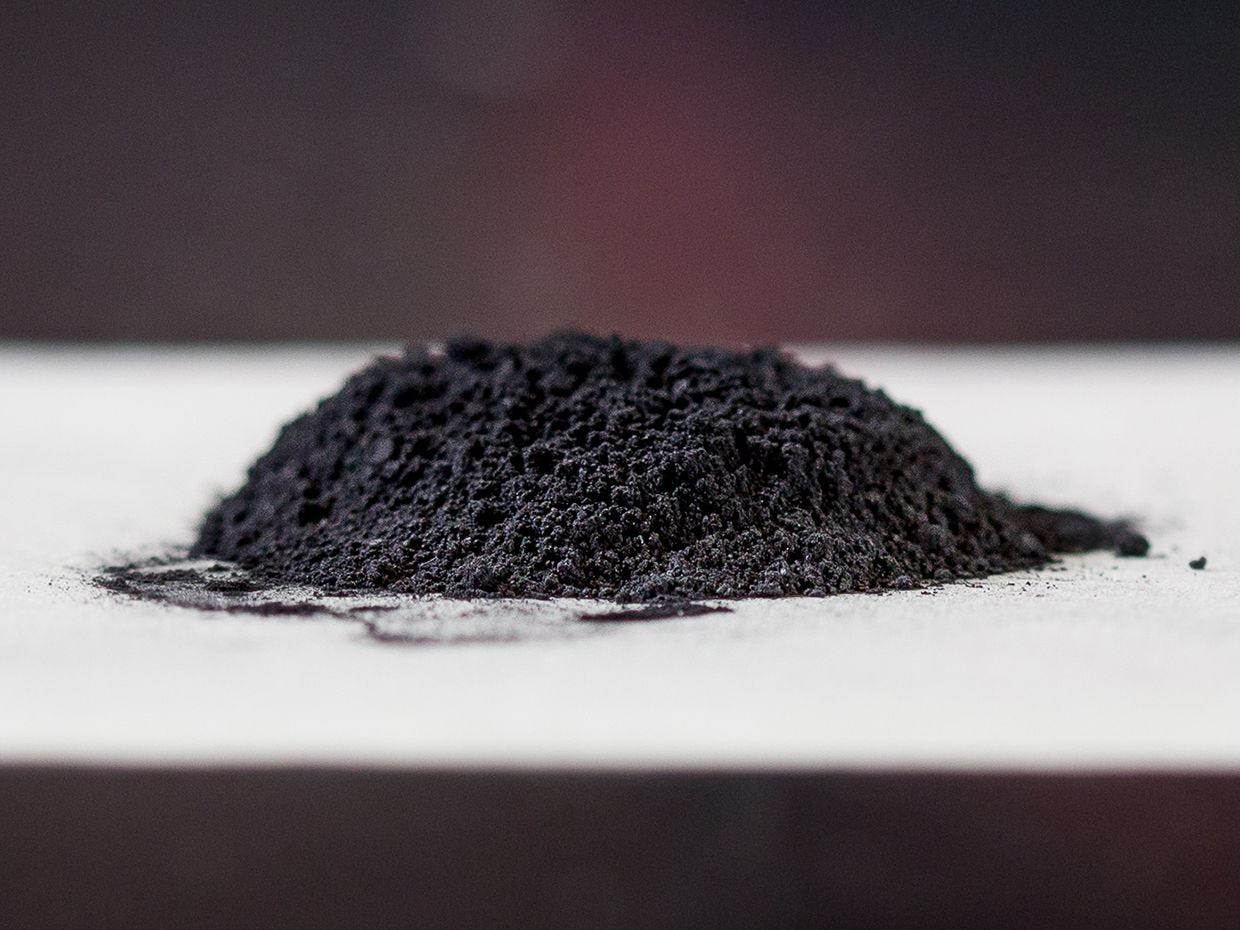
Until recently, recycling of lithium batteries was far from a pretty and efficient process. The batteries had to be ground or burnt, and then treated with solvents to recover some of the metals from the dark dust known as “black mass.” Even worse, the vast majority of global lithium-ion battery waste is currently not recycled at all.
But the old ways are gradually giving way to new. A few recent examples include:
Li-Cycle, North America’s largest lithium-ion battery recycler (which went public earlier this year), has developed patented “Spoke and Hub” technologies that bypass the heating and burning process to recover 95% of valuable battery materials.
Aceleron, a UK-based clean technology company, is tackling the recycling issue from a different angle, creating next-generation batteries that are easier to disassemble and reuse.
Volkswagen is piloting a new plant which will help the carmaker improve the effectiveness of its recycling from 60% to 95% of EV battery materials.
Researchers at Aalto University in Finland announced in April a groundbreaking discovery: Cobalt-containing electrodes in lithium batteries can be reused after being newly saturated with lithium. The researchers are now going to examine whether the same method can be used with the nickel-based batteries of electric cars, which would negate the need for a lengthy chemical process, save energy and raw materials, and be applied on an industrial scale.
💡The Optimist’s Edge
The looming tsunami of spent lithium-ion batteries is fueling the innovators charged to prove the naysayers wrong. In just 9 years, the market for lithium-ion battery recycling is projected to grow to $18 billion, up from $1.5 billion in 2019. That’s quite a feat for an industry that 54% of survey respondents don’t think exists.
To Li-Cycle’s co-founders, Executive Chairman Tim Johnston and President Ajay Kochhar, it’s a “tremendous” market opportunity that should inspire “an army of recyclers.”
So, what’s behind their bright outlook? Take a look at the sales projections for electric vehicles. Despite the impact of the coronavirus pandemic, electric vehicle sales grew by 43% in 2020 to reach more than 3 million even as overall car sales slumped by one fifth. By 2030, Deloitte forecasts annual EV sales will hit 31.1 million, up from 11.2 million in 2025. In global market share, EVs are expected to skyrocket from today's 3% to 58% in 2040"
The fact is even these numbers may be too pessimistic. As we explained in this article, plummeting battery prices mean it’s very likely electric vehicles will start to outsell gas cars between 2025 and 2030. The growth rate is so fast, Straubel tells CNBC, that demand for the materials in lithium-ion batteries could in just five years outpace supply — unless companies learn to take full advantage of what is right in front of them, batteries that have reached the end of their lifecycle. Companies simply cannot afford to let recycling take a backseat.
The end-of-life battery, says Jean-Philippe Hermine, Renault's VP for strategic environmental planning, is the urban mining of Europe.
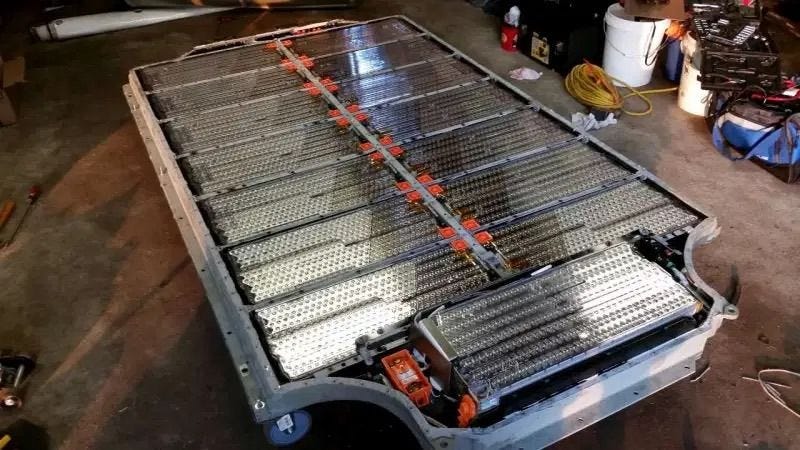
What can you do with that knowledge?
👇 This is how you get the edge
Join the race
Remember what we wrote about needing an army of recyclers? It’s hard to picture any industry that will have a more insatiable need for more and better solutions than lithium-ion battery recycling. Organizations like ReCell Center, a battery-recycling research collaboration supported by the U.S. Department of Energy, are always on the lookout for the next big thing. Perhaps your ideal partner is a Premium Supporter?
Let the job offers roll in
By 2040, over 2 million tonnes of lithium-ion batteries will need to be recycled in the United States alone — and Lithion Recycling seeks your help to “tackle the many challenges of environmental decarbonization.” Count on seeing more pitches like this as the recycling market grows at record pace. In an industry that’s already struggling with a skills gap, demand for qualified workers is likely to create a lucrative market for job seekers.
A quick Ziprecruiter search for “lithium battery jobs” yielded 357 hits: Battery Design Engineer, Lithium Battery R&D Engineer, Senior Battery Strategist, Lithium Battery Research Scientist…the list goes on.
“The researchers involved in recycling are very passionate about what they do — it’s a big technical challenge and they want to figure it out because it’s the right thing to do,” says Jeff Spangenberger, director of ReCell Center, in IEEE Spectrum. “But there’s also money to be made, and that’s the attraction.”
Explore investments
After reading this article, you can likely guess what we’ll say here. From an investment perspective, it makes sense to keep an eye on the big recycling players who currently have a leg up on the competition, while not ignoring potential disruptors who dare to challenge status quo. There is, for example, alongside the drive for recycling, a growing market for the reuse of EV batteries for energy storage.
Also, this advisor reminds us to not forget the ecosystem of partners poised for growth as demand soars for lithium-ion batteries in not only EVs, but personal electronics and wearable technology as well: charging station developers, component manufacturers, equipment makers, ethically-run mining companies, and more.
❓ What more can you do?
Please share more ideas with your fellow Premium Supporters in our Facebook group.
Learn more
Did you know the vast majority of people are completely wrong about when electric cars will be cheaper to buy than petrol cars? Make sure to read this article: 🔋 Electric Cars Cheaper than Petrol Cars
We are building a library of optimistic edges, exclusive for our Premium Supporters.
Note: Claims in this article do not constitute financial or investment advice. Always do your own research before investing.