


Guest column by Vladan Lausevic
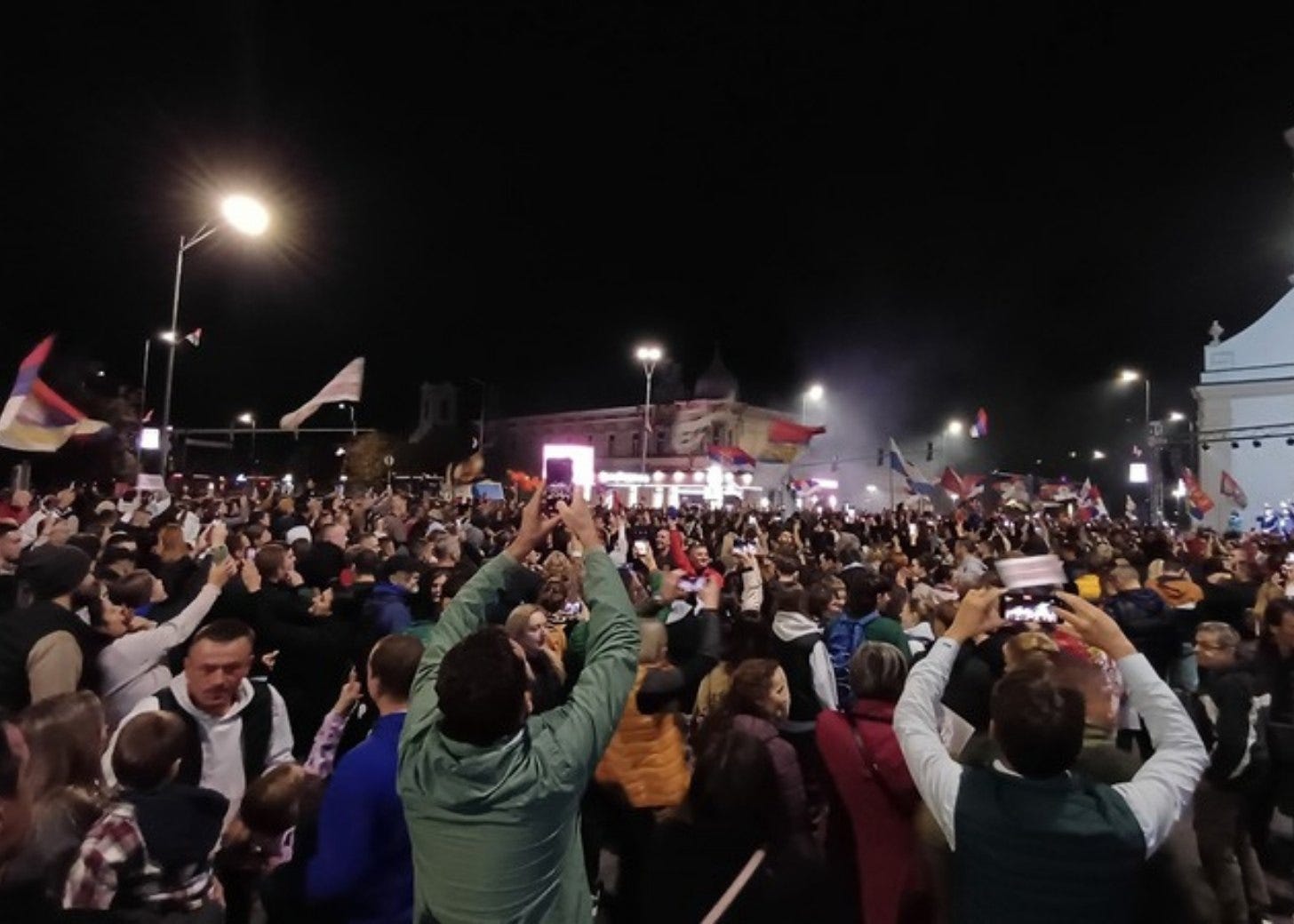
The student movement was organized without a traditional party leader and used open student assemblies and direct democracy meetings to make decisions.
The methods later spread beyond the universities through local citizens' assemblies, where residents discuss problems and possible solutions.
The Student List won 53 percent of the vote. Serbia's Republic Electoral Commission says the list will get 141 of the 250 seats in parliament.
Now a democratic experiment with decentralization, direct democratic participation and citizens' assemblies will be tested in parliament and in government.
Much of the discussion about democracy in recent years has been about decline. Democratic institutions are getting weaker, media freedom is eroding and trust in established political parties is falling in several countries.
At the same time, a democratic experiment has grown in Serbia. It did not start with a new party or a strong new leader, but with students who organized protests and developed new ways of making decisions.
From disaster to student movement
On November 1, 2024, the canopy at the railway station in Novi Sad collapsed and 16 people died. The disaster set off student-led protests against perceived corruption and a lack of accountability. It was the start of almost two years of protests, both small and large.
Students blockaded universities and organized protests around the country. The movement also began to experiment with how to make its own decisions and agree on the way forward.
Instead of appointing a party leader, they used open student assemblies, known as plenums. There, issues were discussed and the participants made decisions together.
No traditional party leader
During the protests, people in several parts of Serbia began organizing local citizens' assemblies. There, residents could discuss issues that affect their daily lives, put forward proposals and try to influence local decisions.
When the movement later entered electoral politics, it kept much of the same organizational model.
The Student List did not build its campaign around a traditional party leader. Instead, the students chose decentralized methods and networks of local student groups, support groups, candidates and volunteers. Together they drew up the 11-point “student plan” as their party platform.
The list was made up of 250 candidates from different parts of society. The idea is that every candidate must have the education and skills for what they will do in parliament as an elected representative. For example, anyone who will work on health care issues has to be a doctor or a nurse.
The idea is not to replace elections or the national parliament. Rather, it is about people being able to take part more between elections as well. Citizens still elect representatives who make decisions in parliament and government. At the same time, the goal is to create more forums where people themselves can discuss and influence politics.
From protest to parliament: now the hard part begins
In September, Serbia's Republic Electoral Commission formally approved the Student List for the parliamentary election. The campaign was built on, among other things, direct contact with voters, local activities and a platform focused on anti-corruption and institutional reforms.
The big test came on October 25, and the students did something even more unique and historic by global standards. According to the preliminary results, the Student List won 53 percent of the vote, compared with 39 percent for the SNS and Aleksandar Vučić's list, which has governed the country since 2012.
Now come the challenges and the tests. Making decisions together during a protest is one thing. Making decisions about the national budget, energy, health care, foreign policy and the justice system is something else entirely.
That is why developments in Serbia will be interesting to follow in the coming years. When so much of the debate about democracy is about how to defend existing institutions against authoritarian trends, Serbia shows something positive: it is also possible to renew and improve democracy so that citizens get more opportunities to take part and work together.
In less than two years, the movement has gone from student meetings and blockades to citizens' assemblies, a national electoral list and a parliamentary majority. Now it remains to be seen whether the same ideas about more open participation, decentralization and transparency also work when the movement itself holds power.