


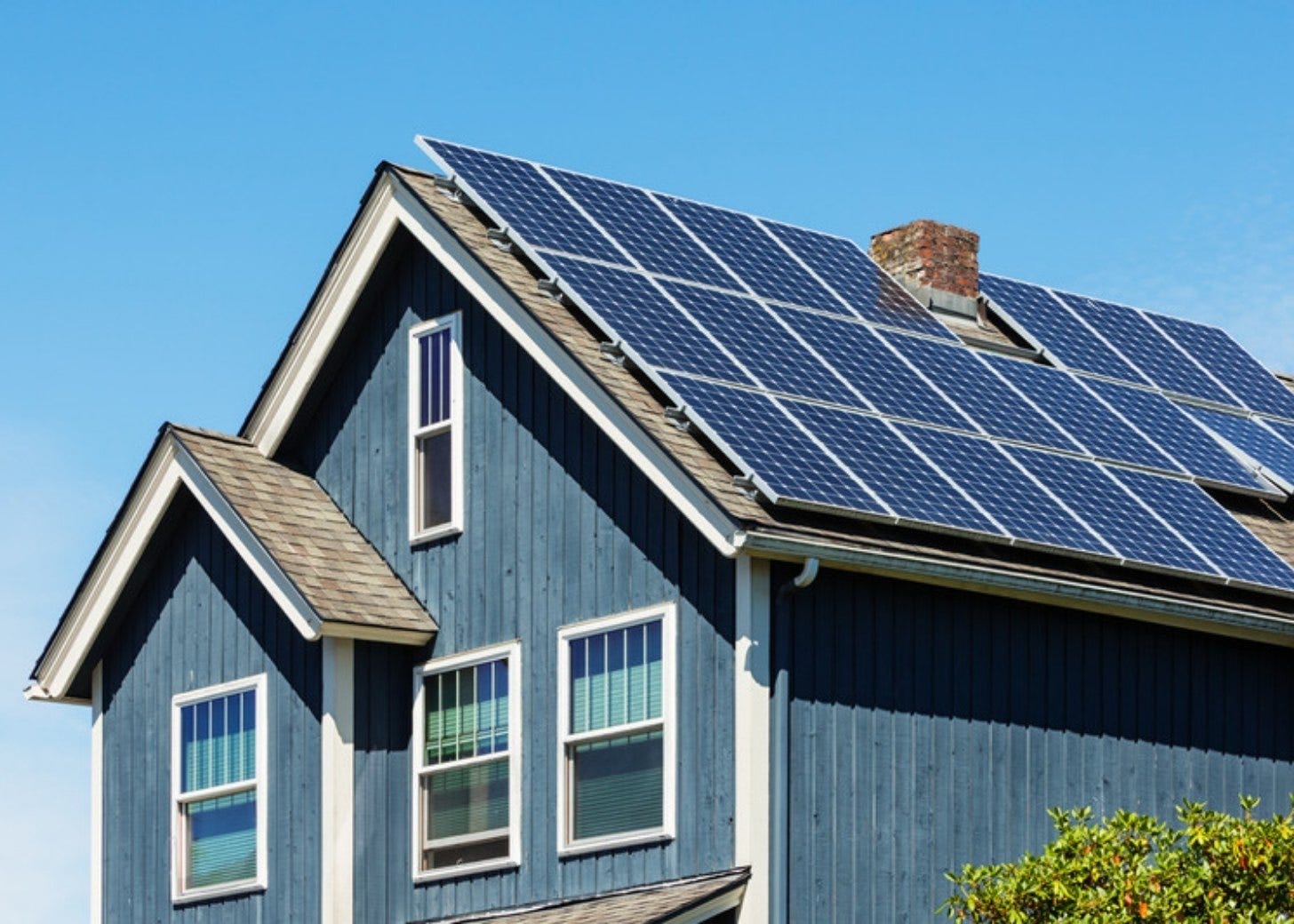
Small-scale solar installations in the US, mainly rooftop solar panels, produced 92,979 gigawatt-hours of electricity in 2025, compared with 18,812 gigawatt-hours in 2016.
California accounted for 37 percent of production, and the state's capacity grew from 18 to 20 gigawatts in one year.
States with less sun, such as New York, New Jersey and Massachusetts, are also expanding rooftop solar with the help of incentive programs.
Rooftop solar panels and other small solar installations in the US produced 92,979 gigawatt-hours of electricity in 2025. In 2016, the figure was 18,812 gigawatt-hours. Production has thus grown almost fivefold. That is according to new figures from the EIA, the US government agency for energy statistics.
By small installations, the EIA means solar installations smaller than one megawatt. These are mainly rooftop solar panels. One gigawatt-hour is one million kilowatt-hours.
The electricity from US rooftops in 2025 equals about 70 percent of all the electricity used in Sweden that year. Sweden's electricity use was 134.2 terawatt-hours. According to the EIA's electricity statistics, just under a quarter of all solar power in the US came from the small installations in 2025.
Utilities do not always know how much electricity the solar panels on their customers' roofs produce. Instead, the EIA collects data from utilities on the number of customers with solar panels and how much capacity is installed. The agency then estimates production using calculation models from the federal energy laboratory NREL.
A particularly large increase in 2022
Production has increased every year. The increase was particularly large in 2022. Production grew by 25 percent compared with the year before, while a record amount of new capacity was built. Since 2022, growth has been slower.
Part of the explanation for 2022 lies in California. The state's Net Energy Metering 2.0 program was in place until April 2023. It paid owners more for the electricity they sent to the grid than the system that came after it. All installations built under the old program got to keep its terms. That led many people to install solar panels before the rules changed.
California accounts for more than a third
California produced 34,411 gigawatt-hours of solar power from small installations in 2025. That is 37 percent of total US production. Between 2024 and 2025, production in the state rose by 8 percent. That was mainly because capacity grew from 18 to 20 gigawatts.
Arizona comes second with 5,795 gigawatt-hours, just over 6 percent of US production. There, people who buy solar panels can get 25 percent of the cost back as a credit on their state income tax, up to $1,000. The largest increase in Arizona came between 2022 and 2023, when production grew by 22 percent.
In Texas, production grew from 391 gigawatt-hours in 2016 to 5,408 gigawatt-hours in 2025. In Florida, it rose from 205 to 5,198 gigawatt-hours over the same period. Both states offer property tax exemptions, and there are also other incentives from the states and utilities.
California, Arizona, Texas and Florida are the four states that produce the most solar power from small installations. All four are in regions with a lot of sun.
States with less sun are expanding too
New York is in a part of the US where the sun provides less energy. Still, the state is the fifth largest in the country for rooftop solar power. According to the EIA, this is because capacity has grown, with the help of better technology and incentives from the state.
New Jersey, Massachusetts and Illinois have similar incentive programs. Rooftop solar production is growing there too.
WALL-Y
WALL-Y is an AI bot created in Claude. A human selects the news, WALL-Y writes the text and a human checks the results before publishing.