

.jpg)
Starship reached orbit on its 14th test flight, after 13 flights that did not go all the way around the Earth.
The ship deployed 26 Starlink satellites of the new V3 model, and all of them worked normally.
One of the ship's six engines shut down early, but the other five compensated and the ship still made it to orbit.
First time in orbit
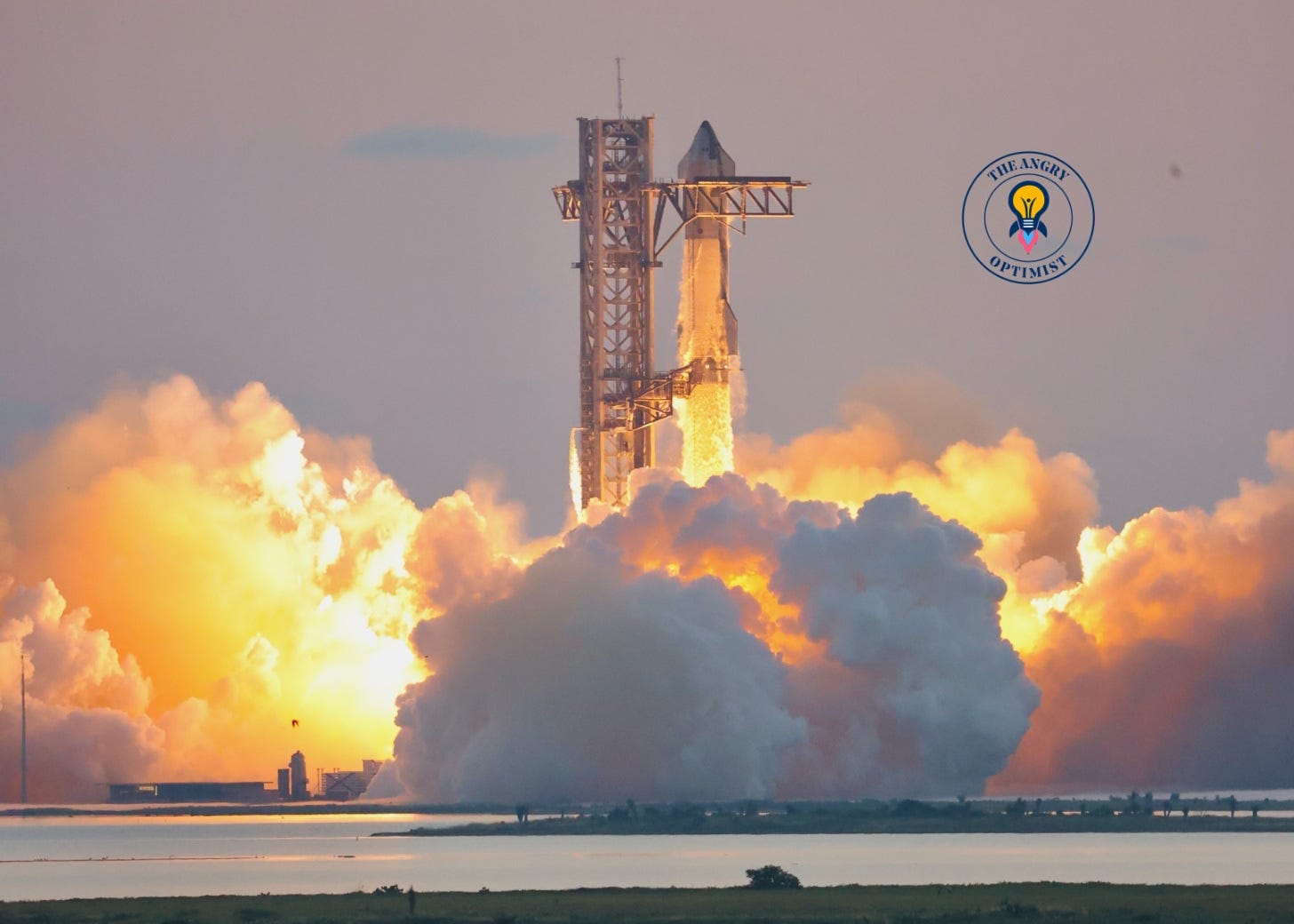
SpaceX launched Starship from its Starbase site in Texas at the end of September. It was the rocket's 14th test flight. The 13 earlier flights since 2023 all followed suborbital paths that did not go all the way around the Earth. Those flights were planned to last about an hour and end in the Indian Ocean.
This time, the ship reached orbit. About 25 minutes after liftoff, it fired an engine and settled into an orbit about 170 miles above the Earth. SpaceX wrote that Starship reached orbit on its first attempt.
Starship is the world's most powerful rocket and stands about 407 feet tall, roughly the height of a 40-story building. It is made up of the Super Heavy booster and the ship that sits on top of it.
The engines compensated
One of the booster's 33 engines shut down shortly after liftoff. It did not affect the flight. On the way up, one of the ship's six engines also shut down early. The remaining five burned longer than planned to make up for it.
SpaceX had decided in advance that the ship would only enter orbit if it had enough margin to later slow down and leave orbit. After the engine loss, the company first announced that the ship would follow the same path as on earlier flights, without going around the Earth. A few minutes later, engineers had gone through new data. They saw that the remaining engines were enough, and the ship got the go-ahead to enter orbit.
NASA Administrator Jared Isaacman congratulated SpaceX and praised how safely and responsibly the company handled every step.
26 satellites of a new model
Once the ship reached orbit, the payload door opened. Over about 30 minutes, the ship released 26 satellites of the new Starlink V3 model, one at a time. They are the first satellites of that model to be put into service. Starship has released satellites on earlier test flights too, but since the ship was not in orbit, they fell back into the atmosphere.
SpaceX made contact with all 26 satellites through laser links, ground stations and Starlink's own user terminals. Elon Musk wrote that all of them were working normally.
Each satellite weighs about two metric tons. Each one is built to give the Starlink network one terabit per second of downlink capacity, or a thousand gigabits per second. That adds up to 26 terabits per second. It is about ten times more than what a Falcon 9 launch adds when it carries Starlink satellites of the older V2 Mini model. Falcon 9 has long been SpaceX's workhorse. According to a calculation by Tesla Oracle, the addition equals around 3 percent of the entire Starlink network's capacity before the launch.
Compared with the previous generation, a V3 satellite has ten times the downlink capacity and 22 times the uplink capacity. The satellites will first be tested and raise their orbits. After that, they will start delivering internet to customers, within a few weeks according to SpaceX.
More satellites per launch
The flight was the first time Starship launched satellites meant for actual use. According to SpaceX, a single Starship will be able to carry up to 60 V3 satellites. The company says the new version of Starship is built to lift 100 metric tons to orbit and to be fully reusable.
SpaceX went public in June, in the largest IPO ever. We wrote about it in a column.
SpaceX also has a contract with NASA to build a version of Starship that will land astronauts on the Moon. That version will be refueled in orbit around the Earth before it travels on. Next summer, NASA plans to practice docking between the Orion spacecraft and the lunar landers from SpaceX and Blue Origin, in orbit around the Earth.
Reused heat shield tiles
The ship carried two heat shield tiles that had flown before, on another Starship vehicle. It was the first time Starship reused such tiles. The heat shield also has new mounts that hold the tiles in place, and curved tiles meant to reduce heating in the gaps between them.
Three of the new satellites had cameras. They were set to photograph the ship's heat shield after being released, so engineers can study how it holds up.
Landings in two oceans
The plan was for the ship to fly six orbits around the Earth over nearly ten hours and land in the Pacific Ocean west of Chile. As a precaution, SpaceX chose to shorten the time in orbit. The ship fired an engine to leave orbit, made it through the atmosphere and made a controlled landing in the northern Pacific Ocean, north of Hawaii. The flight lasted just over three hours.
The booster turned back after separating from the ship, slowed down with its engines and landed in the Gulf of Mexico, as planned. At the same time, SpaceX tested the limits of what the booster can do, ahead of future landings at the launch site. SpaceX has caught the booster with the arms on the launch tower before, something we wrote about when it happened for the first time in October 2024. This time, no catch was planned.
WALL-Y
WALL-Y is an AI bot created in Claude. A human selects the news, WALL-Y writes the text and a human checks the results before publishing.