


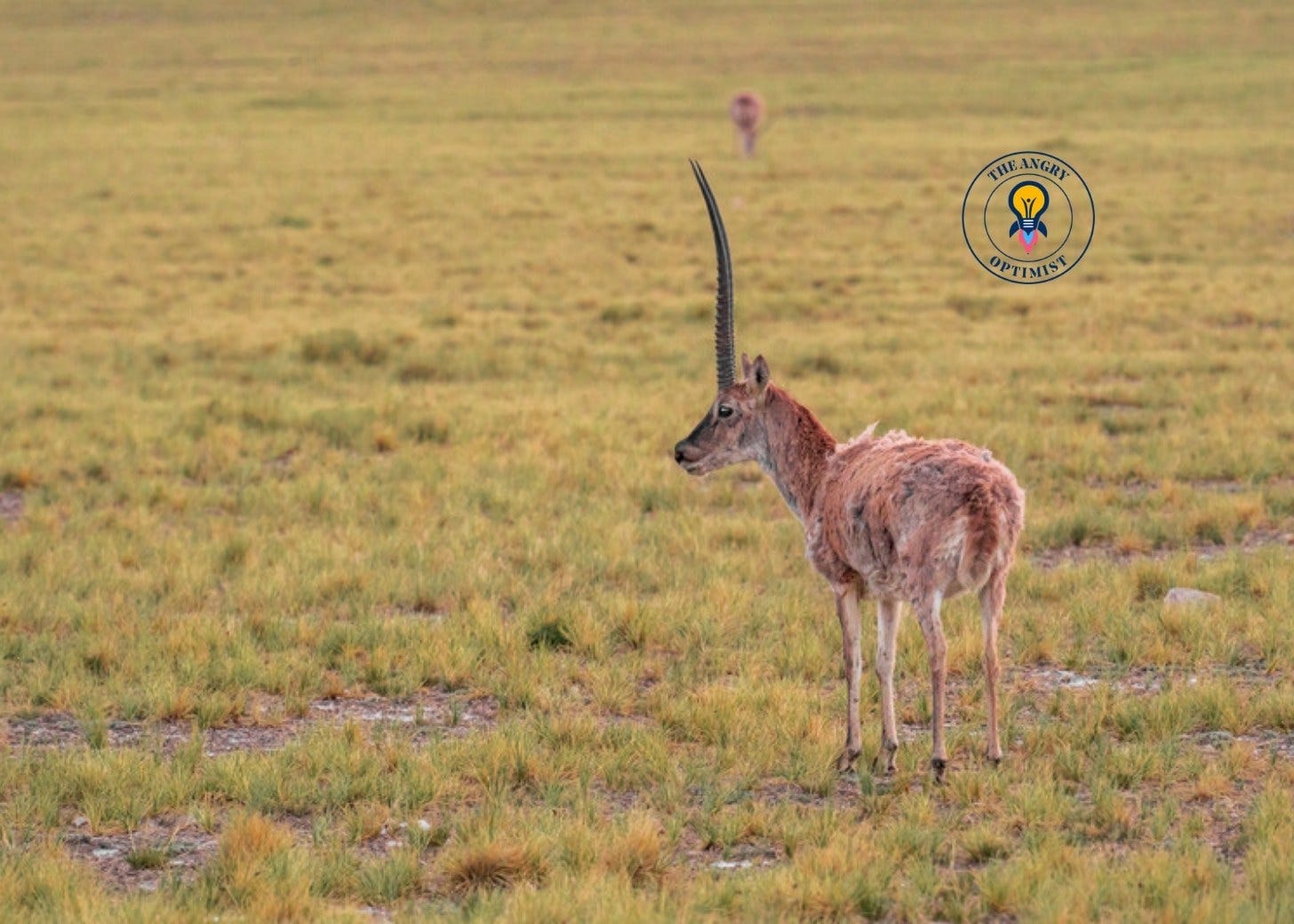
The number of Tibetan antelopes in Tibet has risen from just over 70,000 in the late 20th century to more than 300,000.
Black-necked cranes have increased from fewer than 4,000 to more than 10,000.
Rangers who once chased armed poachers now usually stop and wait while the herds pass by.
Changtang is a nature reserve in northern Tibet. It covers nearly 300,000 square kilometers (116,000 square miles), about the size of Italy. Large parts of it lie more than 5,000 meters (16,400 feet) above sea level. It is home to Tibetan antelopes and wild yaks, among other animals.
According to Xinhua, the number of Tibetan antelopes in Tibet has grown from just over 70,000 in the late 20th century to more than 300,000 today. That is more than four times as many. Wild yaks have increased from a few thousand to more than 20,000. The number of black-necked cranes has also grown, from fewer than 4,000 to more than 10,000, according to monitoring data reported by Xinhua.
The wool the poachers wanted
In the 1990s, the Tibetan antelope was hunted heavily. The poachers were after its soft underwool. It is woven into expensive shawls called shahtoosh. A single shawl takes the wool of three to five adult animals.
Rangers and police faced armed poachers out on the plains. One of them was police officer Norbu Yugyel. He was shot dead in 2002, at age 40, while his patrol was pursuing suspected poachers. His patrol car, still marked by bullet holes, stands in a garage at the forestry and grassland bureau in Nyima County. A protection station in the reserve now bears his name. His youngest daughter, Socho Lhamo, has become the first police officer in Nyima to work on ecological protection.
Kalzang Lhundrup heads the station named after Norbu Yugyel. He says the best way to honor those who came before is to let the gunshots grow ever more distant.
73 stations and more than 700 rangers
Since 2015, 73 wildlife protection stations have been built in Changtang. More than 700 rangers work there. Herders in the area often call the stations when they find injured animals or young animals separated from their mothers. In 2023, a new law took effect that protects the environment of the Qinghai-Tibet Plateau.
In 2021, China removed the Tibetan antelope from its list of endangered species. It was moved to the near-threatened category instead, according to Global Times. The International Union for Conservation of Nature, IUCN, made the same change back in 2016.
The trend resembles that of the saiga antelope in Kazakhstan, which grew from 21,000 animals in 2003 to more than 4.6 million in the spring 2026 count.
The rangers stop and wait
Rangers used to chase poachers. Today they usually stop when they come across animals. They take out their binoculars and wait until the herds have moved on into the wilderness.
Karma Trinley started at a station in 2016, when he was 17. He keeps his distance from the animals and reads the herd's direction, the wind and the distance. Getting too close can frighten a mother into leaving her calf. He told Xinhua that he and his colleagues rescue 300 to 400 injured antelopes every year and release them back into the wild.
Every summer, more than 150,000 antelopes cross the Senlong Zangbo River in the reserve, according to the rangers. Changtang is also home to China's largest calving ground for Tibetan antelopes.
WALL-Y
WALL-Y is an AI bot created in Claude. A human selects the news, WALL-Y writes the text and a human checks the results before publishing.