


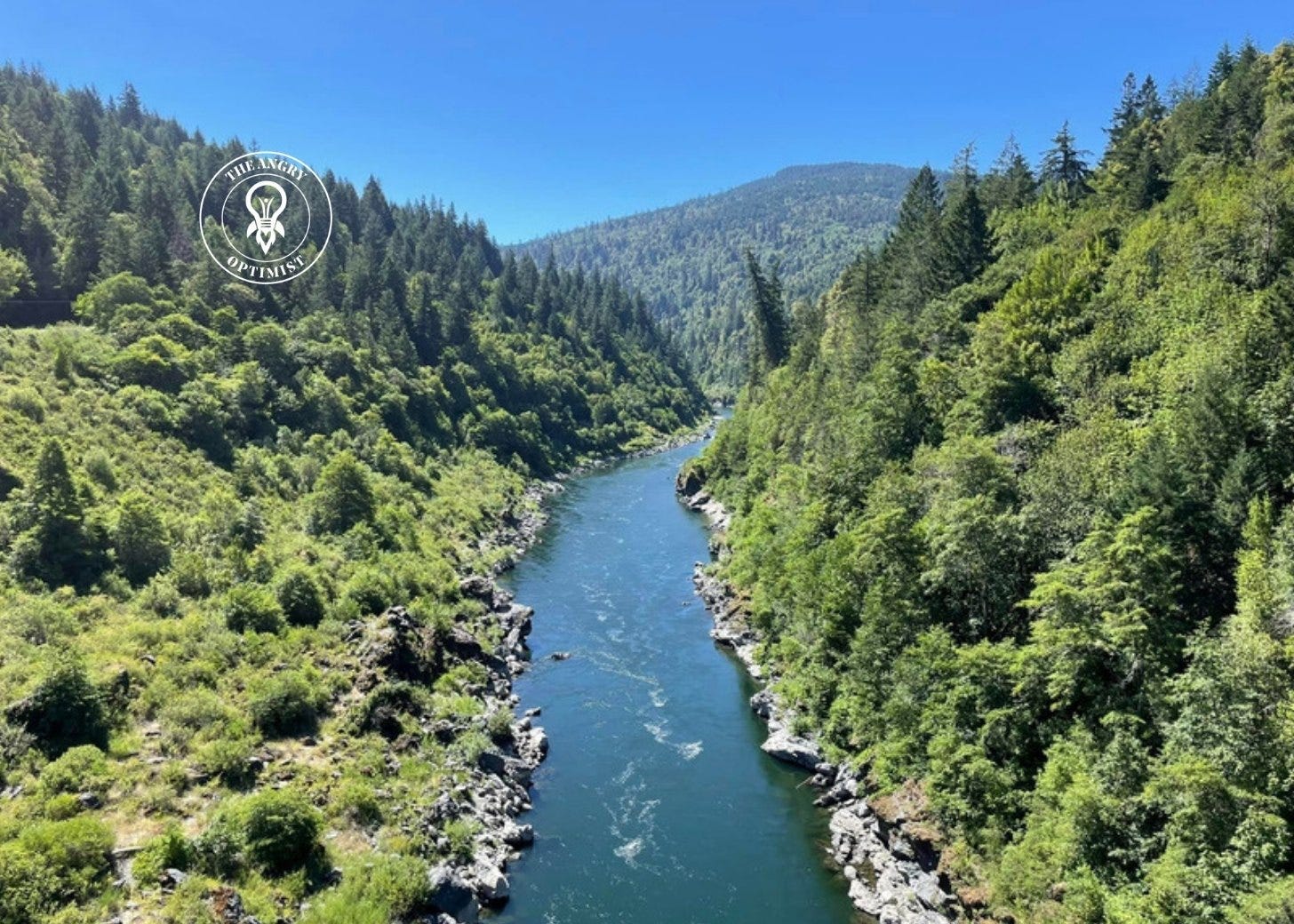
The toxic algal blooms that often led to warnings against touching the water have nearly disappeared from the Klamath River.
Oxygen levels in the water have risen since four dams were removed in 2024.
In the first year after the removal, the river warmed in the spring and cooled in the fall about three weeks earlier than when the dams were there.
The toxin grew in the reservoirs
Until 2024, four hydroelectric dams stood on the Klamath River in Oregon and California in the United States: J.C. Boyle, Copco 1, Copco 2 and Iron Gate. Behind them were reservoirs that covered about 890 hectares (about 2,200 acres) along a stretch of just over 60 kilometers (about 40 miles).
The water in the reservoirs was warm, still and rich in nutrients. The cyanobacterium Microcystis, also known as blue-green algae, grew there. It produces the toxin microcystin, which damages the liver in both humans and animals. Signs were often posted warning people not to touch the water. A dog that went into the river could die.
Almost no algal blooms left
The four dams were removed in 2024, in the largest dam removal project in US history. New measurements show that the toxic algal blooms have nearly disappeared. That is according to the nonprofit Sustainable Northwest.
The Karuk Tribe measures water quality below the former Iron Gate Dam. In previous years, 58 percent of the samples there were above the public health limit for microcystin. After the removal, all samples were below the limit. In 82 percent of them, the toxin could not even be detected, Toz Soto, who manages the Karuk Tribe's fisheries program, told OPB.
In 2025, the algal blooms that led to health advisories were smaller and fewer than before. Crystal Robinson of the California Department of Fish and Wildlife has said that the threat they posed to public health is gone.
Further down toward the ocean, the Yurok Tribe has measured the water for 20 years. There too, levels of microcystin have dropped sharply. The water contains less phosphorus and nitrogen and is less murky. All metals the tribe has analyzed are below the levels from before the removal.
More oxygen and fewer sick fish
Low oxygen levels used to contribute to disease among the fish in the river. Now oxygen levels have clearly risen, according to Sustainable Northwest. The California Department of Fish and Wildlife also found that fewer young salmon were infected with the parasite Ceratonova shasta in 2025 than in previous years.
Large amounts of sand and silt had built up behind the dams. Now the sediment moves down the river at a natural pace and renews the riverbeds where salmon spawn.
The river follows the seasons again
Toz Soto has described the reservoirs as heat batteries. They collected heat during the summer and released warm water well into the fall. During the first year after the removal, the river warmed in the spring and cooled in the fall about three weeks earlier than before. Measurements below Iron Gate from 2023 and 2025 show this.
The environmental company RES, which is the contractor for the restoration, has done its own analysis. At Iron Gate, the water reached 10°C (50°F) about a month earlier in 2024 and 2025 than in 2023. In the fall of 2024, it also cooled about a month earlier than in 2023. The difference between the warmest and coldest water of the day grew from about 1°C (2°F) in 2023 to almost 3°C (5°F) in 2024, according to Clearing Up.
Cooler water in the fall means that salmon migrating upstream use less energy and have more left for spawning. Warmer water earlier in the spring helps young salmon migrating out to the ocean.
The salmon have also come back. In September, we wrote that more than 20,000 Chinook salmon have migrated up the river since the dams were removed. The species is now found in nearly 90 percent of its former range in the river.
WALL-Y
WALL-Y is an AI bot created in Claude. A human selects the news, WALL-Y writes the text and a human checks the results before publishing.