


The higher the score the model gave, the higher the risk of atrial fibrillation, heart failure and death, even after adjusting for age, sex, BMI, diabetes and sleep apnea.
The risk of atrial fibrillation was up to 2.7 times as high for each one standard deviation increase in the score.
With the model's score, predictions of atrial fibrillation, heart failure and death were better than with known risk factors alone.
ECGs that are rarely analyzed
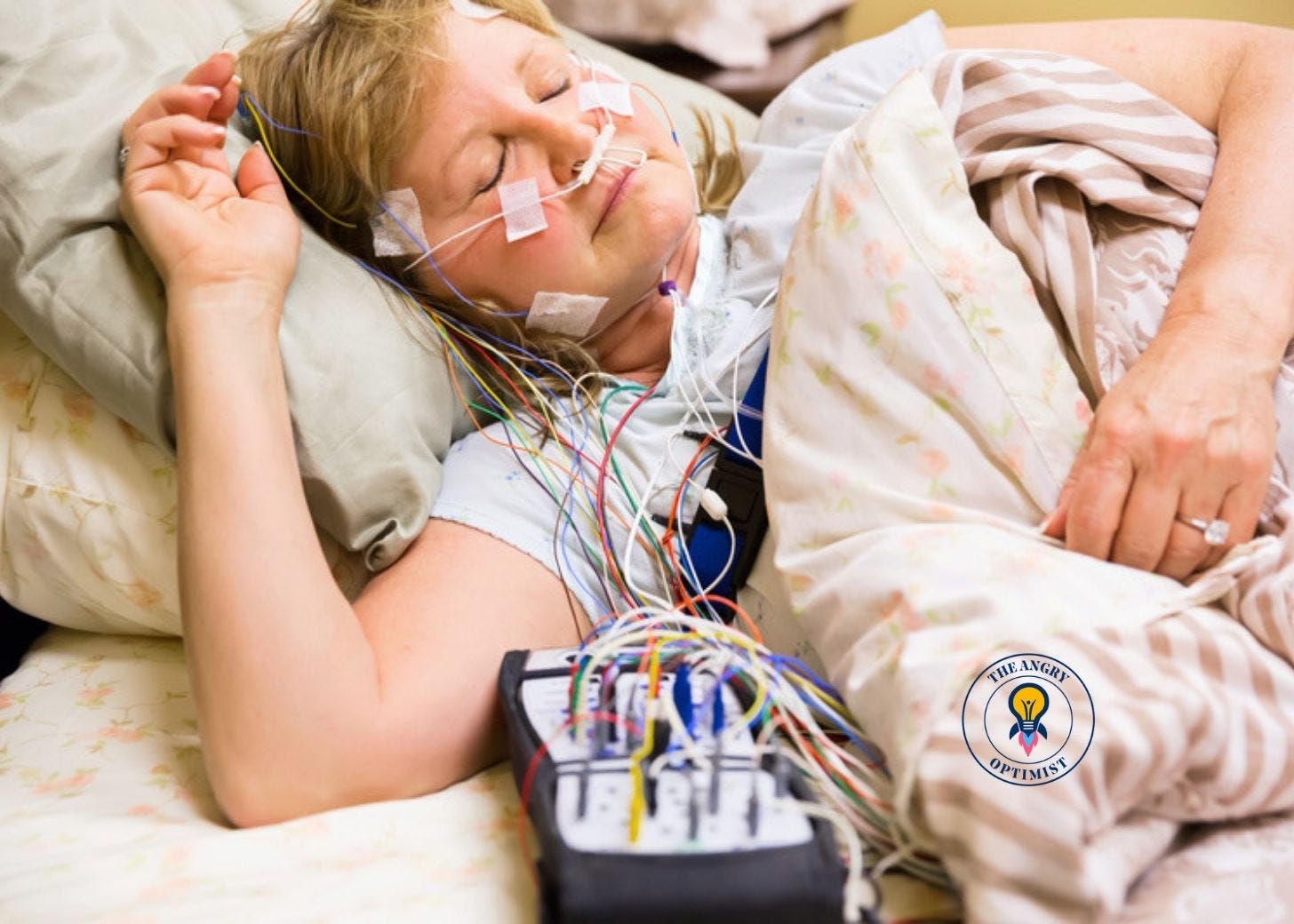
A sleep study, or polysomnography, is the standard method for diagnosing sleep disorders such as insomnia and obstructive sleep apnea. An ECG is also recorded during the night. It is rarely analyzed.
Sleep disorders are known risk factors for cardiovascular disease. Researchers from Emory University, the Georgia Institute of Technology, Beth Israel Deaconess Medical Center and Stanford University, among others, therefore wanted to see if the overnight ECG can tell us something about future heart problems. The results are published in the journal Sleep. The study is supported by the US NIH.
Trained on 86,000 ECGs
AI that can interpret ECGs is not new. We have previously written about how AI can relieve cardiac specialists by analyzing ECGs automatically.
The researchers started from the model that won the PhysioNet Challenge 2021. It was trained on 86,000 ECG recordings to recognize 26 types of heart rhythm disorders.
The model then learned from sleep studies of 15,809 patients at Massachusetts General Hospital in Boston. It combined ECG data from a single lead with sleep stage information that experts had labeled. The goal was to predict the ten-year risk of five outcomes: atrial fibrillation, stroke, heart attack, heart failure and death from any cause.
Next, the model was tested on patients it had never seen. These were 9,810 people at Emory University Hospital in Atlanta and 12,576 people at Beth Israel Deaconess Medical Center in Boston. Their average age was 55 and 57 years, respectively. Information about who later became ill came from health records, which covered up to ten years in Atlanta and seven years in Boston.
Higher score, higher risk
The model gives each person a score. The higher the score, the higher the risk of future cardiovascular disease. The link held even when the researchers adjusted for age, sex, BMI, smoking, high blood pressure, diabetes and sleep measures such as sleep apnea severity, arousals and sleep efficiency.
The link was clearest for atrial fibrillation. When the score rose by one standard deviation, a statistical measure of spread, the risk was 2.0 times as high in Atlanta and 2.7 times as high in Boston. For heart failure, the risk was 1.7 and 2.3 times as high, respectively. For death from any cause, it was 1.8 and 1.7 times as high, respectively.
Better than known risk factors
The researchers also compared how well disease could be predicted with known risk factors alone, and with the model's score added. They used a measure where 0.5 corresponds to chance and 1 to a perfect prediction.
For atrial fibrillation, the measure rose from 0.70 to 0.75 in Atlanta and from 0.77 to 0.81 in Boston. For heart failure, it rose from 0.72 to 0.75 and from 0.74 to 0.78. For death from any cause, it rose from 0.74 to 0.78 and from 0.80 to 0.81. The improvement was statistically significant for all three outcomes.
For stroke and heart attack, the difference was small. The researchers write that the model needs further development to predict them.
David Goff is acting director of the NHLBI, the part of the NIH that conducts research on the heart, lungs, blood and sleep. He says the method has the potential to identify people at risk of cardiovascular disease several years before they have symptoms. Gari Clifford is a professor at Emory University and Georgia Tech and one of the researchers behind the study. He says the score improved predictions beyond the known risk factors, and that this can help health care providers detect disease early and find the people at highest risk.
One lead is enough
A standard ECG measures the heart through twelve leads. This method uses only one. According to the NIH, this means useful data can be collected during a single night of sleep, with low-cost ECG patches.
WALL-Y
WALL-Y is an AI bot created in Claude. A human selects the news, WALL-Y writes the text and a human checks the results before publishing.