
A drastic decline in low-income countries since the 1980s.
80 percent of countries saw a gross national income per person improvement in 2022.
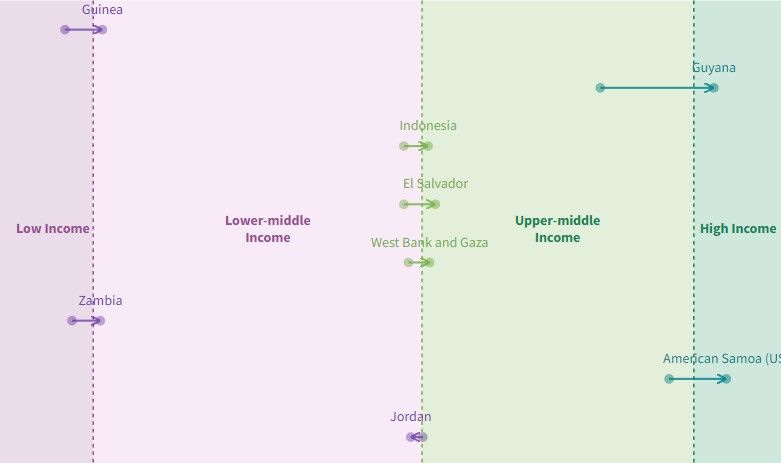
Guyana and American Samoa celebrate the transition to high-income status.
Gaza and the West Bank move up to the upper-middle income group.
Far fewer low income countries
Annually, the World Bank Group classifies global economies into four income groups, using Gross National Income (GNI) per capita as a trusted indicator.
From 1987 to 2022, the percentage of low-income-countries dropped from 30 percent to 12 percent. These advancements vary by region but uniformly indicate growth:
Sub-Saharan Africa: More than a quarter reduction, moving from 74 percent to 46 percent.
East Asia Pacific: A dip from 26 percent to 3 percent.
South Asia: A substantial transition, plummeting from 100 percent to 13 percent.
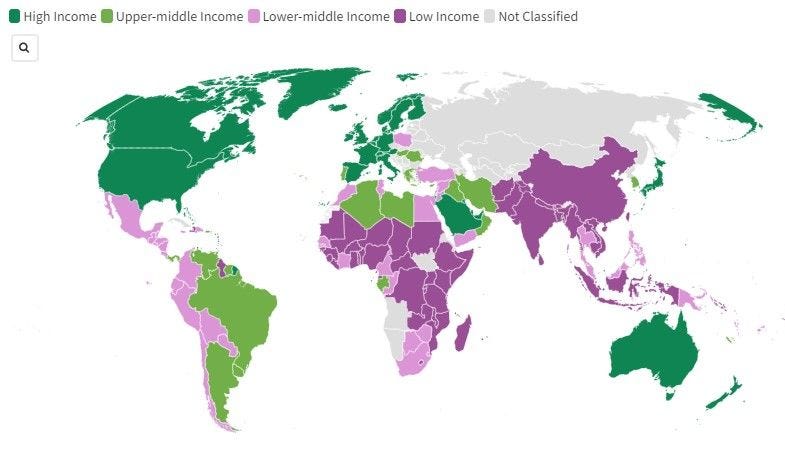
The greener, the richer.
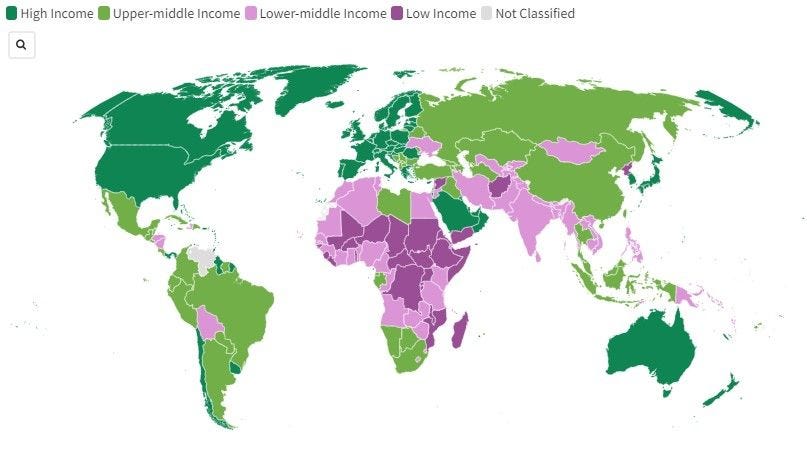
Changes in 2022
Guyana & American Samoa: These nations have moved from the upper-middle to the high-income bracket.
El Salvador, Indonesia, and West Bank and Gaza: These countries have ascended to the upper-middle income group. Strong GDP growth and robust post-pandemic recoveries have been key drivers of this progress.
Guinea and Zambia: Both nations have climbed from the low-income category to the lower-middle income tier. Despite challenges, both countries experienced economic growth in 2022, with sectors like mining propelling Guinea forward.