


This is part 4 of the series Towards the energy society. Earlier parts: part 1, part 2 and part 3. My latest interview with Jonas Birgersson, “Energy on wheels,” is on The Angry Optimist and YouTube. All our articles about the energy society are on the Energy Society page.
In Sweden, Jonas Birgersson is best known as the leading internet pioneer of the '90s, with unicorn startups like Bredbandsbolaget and Framfab. Staffan Ekholm was there back then too and has plenty of stories from those crazy days. Now he has returned to Birgersson's side to help bring about yet another revolution.
Since early 2022, I've been following Jonas Birgersson's work on the energy society, or EnergyNet, as it's usually called these days. Back then it was an idea about building a new power grid on the same principles as the internet. Now it's being built for real and involves more and more people.
On my latest visit to Lund, I met two of them: Jonas Bohlin and Staffan Ekholm himself.
The first journey with Birgersson
In the second half of the 1990s, there was a full-blown internet boom. Lots of people understood that this internet thing was going to be big, company valuations shot through the roof and fortunes worth billions were made almost overnight.
At the time, Staffan Ekholm worked at Swedish telecom company Telia, which ran the web portal Passagen. They hired Jonas Birgersson as a consultant, and he and Ekholm hit it off.
When Birgersson started the consulting firm Framtidsfabriken (or Framfab, as it came to be known), Ekholm became one of the first employees and a part-owner.
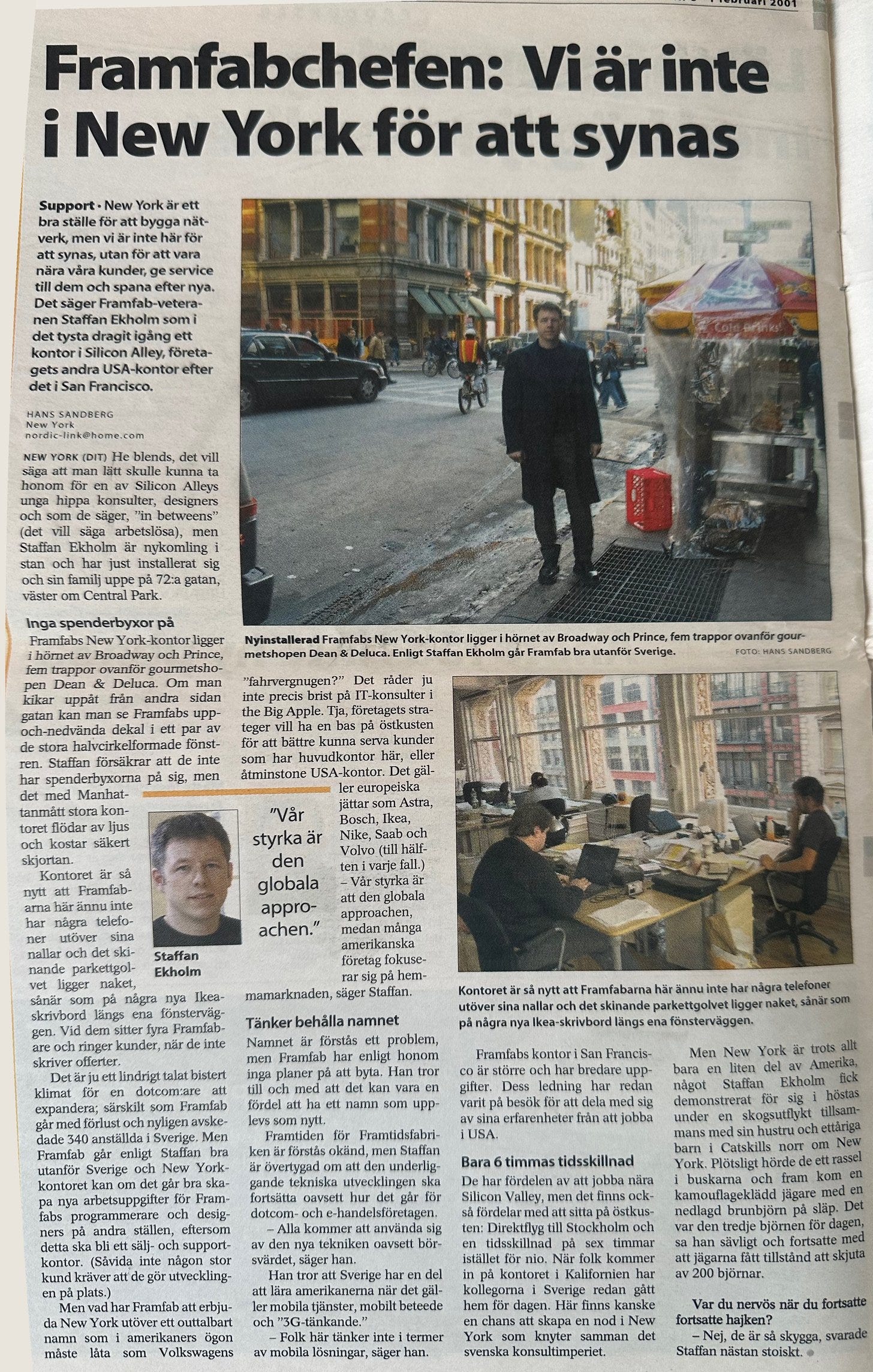
It was, as I said, a wild ride.
Ekholm was responsible for Framfab's biggest clients, including Volvo. For the Swedish carmaker, they built the world's first online car configurator, through a pilot project in Belgium.
Two days after the launch, Staffan Ekholm was called in to see Volvo's head of Europe. It was the spring of 1998.
“I want this. What will it take?” the boss said. He wanted it in all of Europe before the end of the summer.
That was about 20 countries. Hundreds of thousands of parts had to be matched to the right names in the databases. Staffan Ekholm didn't think it was even possible during Volvo's vacation period.
“I didn't ask if it was possible,” the boss said. “I asked what it would cost.”
Staffan Ekholm had to put together a quote. About ten days later, a fax arrived at the office in Gothenburg. It was an order for three million dollars. That was a lot of money for an internet project in 1998.
Framfab went public, and in one year its value went from just about 200 million dollars to more than 4.5 billion dollars. But then the financial internet bubble burst, the clients got cold feet and Framfab had to cut back on both staff and operations. They never went bankrupt, and eventually became part of a large global consulting firm.
But by then, Staffan Ekholm had long since left.
After a couple of CEO jobs at internet companies, he was drawn to the climate transition, and green business models in particular.
The second journey with Birgersson
A while ago, he started hearing more and more that Jonas Birgersson had something new going on in Lund. He got curious, went there and saw something familiar there.
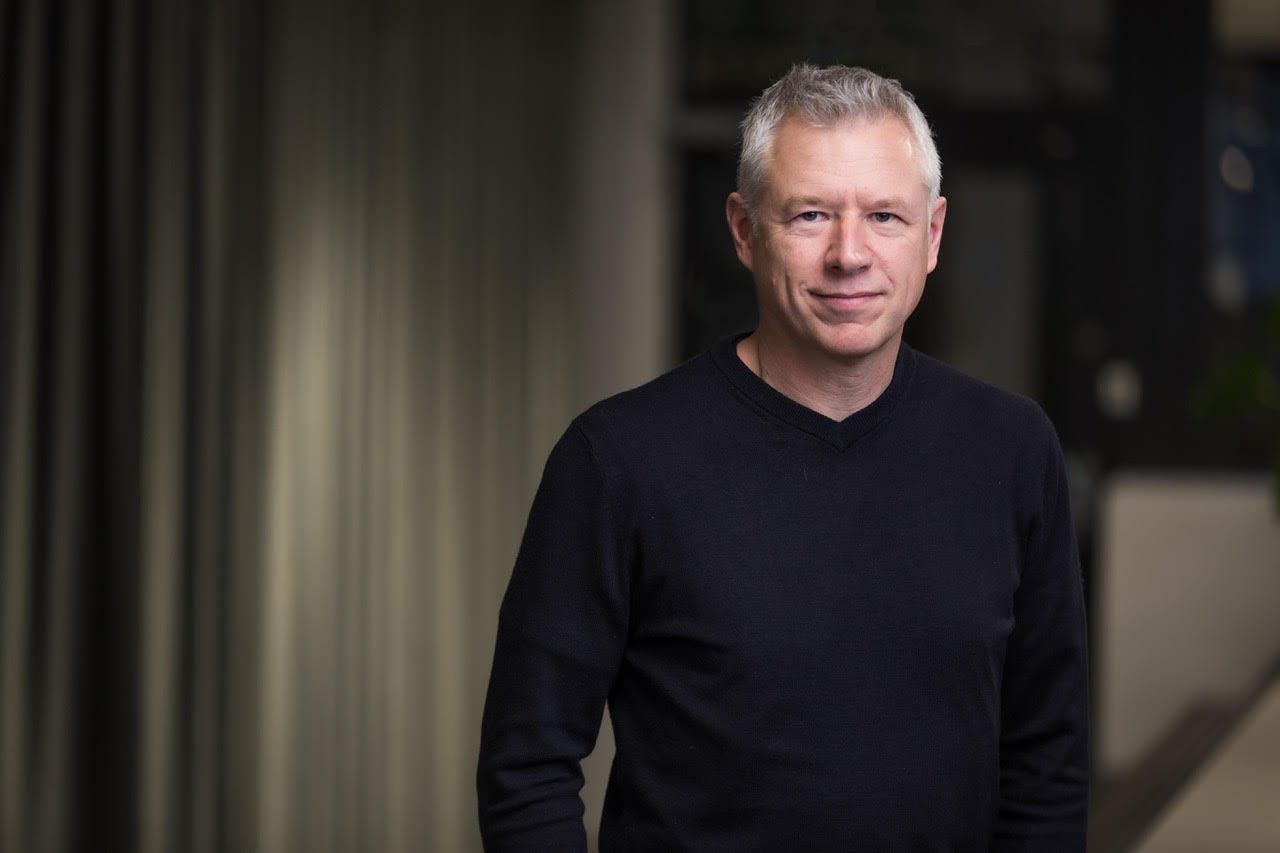
A delegation of researchers from Germany and Denmark was there. They had basically arrived at the same solution, but still had another seven years of research ahead of them to get there. Then they heard on the Volts podcast that there was someone in Lund who had already built a pilot. So they came on a site visit.
Staffan Ekholm was there all day and listened to, among others, Max Collins and Mats Alaküla, professor of electrical engineering at LTH. Birger barely said a word that day. Everyone else talked about his project and about their own research.
“I've seen exactly this happen before. Thirty years ago, with broadband,” says Staffan Ekholm.
He could tell the researchers saw how big this was. Ekholm said right away that he wanted in.
A bit of what's happened since last time
After we've been talking for a while, Ekholm and Jonas Bohlin pull out a computer and show me something fascinating that takes me a couple of days to wrap my head around. But before we get to that, here's a quick update on what's happened since I last wrote an update in the spring:
14 neighborhoods and cities want to join, twice as many as last time. Among them are Gotland, Uppsala, Eskilstuna, Örebro and Malmö.
The first routers were built in the office. ViaEuropa put the very first ones together themselves. Since then, they've started working with a company in Lund that specializes in assembling power electronics. That company will manufacture the routers.
The expansion in Lund continues. 278 households in the Spjället and Pottugnen properties. The first buildings could go live as early as this year, but some roof trusses needed replacing. So solar panels will have to wait on some roofs, while parts of the system can still run this year. In the Ärtan property, with 90 apartments, construction will start after the new year.
An open-source simulator. Max Collins at LTH has built a tool that lets anyone simulate EnergyNet on their own properties, with thousands of runs where sun, temperature and weather vary. The idea is that nobody has to take ViaEuropa's numbers on trust. They can do the math themselves.
Two new scientific papers have been published. How EnergyNet handles disruptions. They simulated how buildings can share electricity when something in the grid breaks down. In the model, all 278 apartments in a block in Lund kept their power even when a connection to the larger grid or a link between the buildings was knocked out. How EnergyNet can be expanded. The authors propose that neighborhoods and campuses coordinate solar panels and batteries in local grids, and that electric vehicles can move electricity between them. The idea is that more electricity can then be produced and used locally, so the larger grid needs less expansion.
An application to the EU Innovation Fund is being prepared in Lund. The fund wants to take technologies that have reached a certain maturity and move them a few steps further, so they can be scaled up across the EU. The application aims to bring EnergyNet to more than 11,000 apartments. The decision to apply is up to Lund Municipality and the municipal housing company LKF.
Of course, a whole lot more has happened, but those are a few highlights.
A storm is coming
Okay then, back to the conference room in Lund, where Jonas Bohlin has opened his laptop and is switching on emergency mode in one of the properties (in demo mode, of course; no properties or animals were harmed during the demonstration).
Let's imagine that a severe storm is on its way and will hit in a few hours, and that major disruptions and possible power outages are expected.
The property owner then activates emergency mode, which means the batteries are charged to full. If the grid then goes down, the system automatically manages the power based on targets for how long different functions should stay powered, and limits what the electricity can be used for. For example, you'll be able to cook and keep the fridge and freezer running, but not fire up the sauna or run the dryer, and the heat might be turned down in all or part of the building.
That lets the property get by on its own in island mode, even if the grid goes down. In the demonstration, it's ten buildings with 278 households, owned by the municipal housing company LKF. They can then keep the power on for between 48 and 72 hours, despite the outage.
Even without emergency mode, the properties can hold out for quite a while. In normal operation, the system automatically sets priorities when the power goes out, and LKF's properties then have electricity for around 10 to 12 hours without the residents' power being limited at all.
If the storm turns out worse than feared and the outage lasts longer than expected, you can shut off or cut back power use in the property even further.
A hassle for the residents, of course, but a whole lot better than being completely without power for a long time.
This isn't possible in properties without EnergyNet, and it gives property owners new options, not just in a storm or a crisis. It opens up new ways to optimize energy use.
The whole idea of EnergyNet, after all, is to internetify the power grid. So this isn't just about being able to control a grid in one property, but about connecting many small grids into one big one. That's why entire residential areas, or a whole city, can be put into emergency mode and pitch in together to keep the most important functions running.
Make it so
Jonas Bohlin clicks eagerly through the menus. He's excited. I get it. Not only are the features good and cool, he's helping create something new that I think will be standard within a few decades.
There are dystopian stories about the future, he says, where resources run short and people are forced to fight over them. But there is also another possibility, where technology makes energy so available that scarcity no longer has to dictate how society develops.
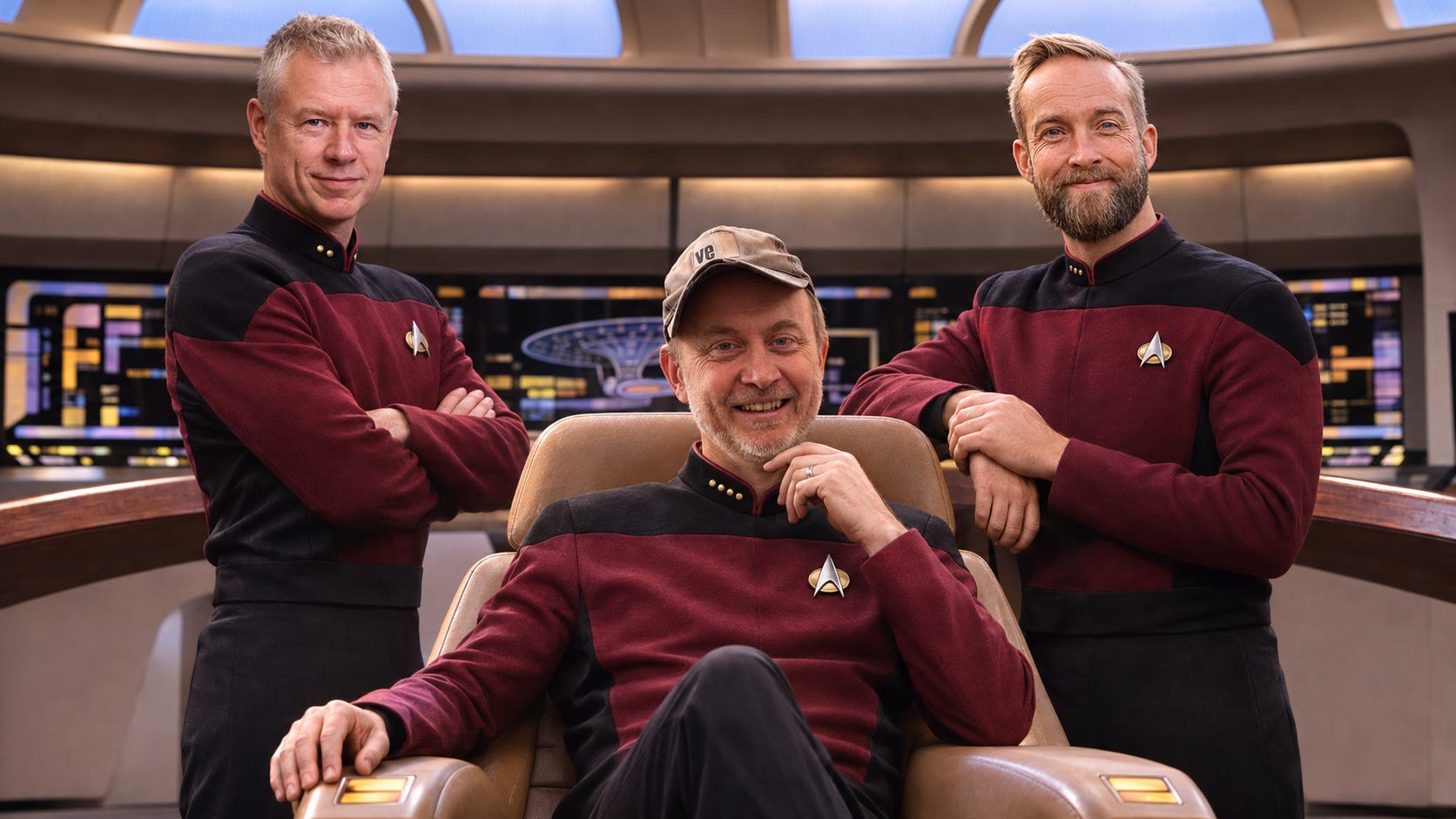
“One is the Star Wars model and the other is the Star Trek model. And this is the Star Trek future we're building.”
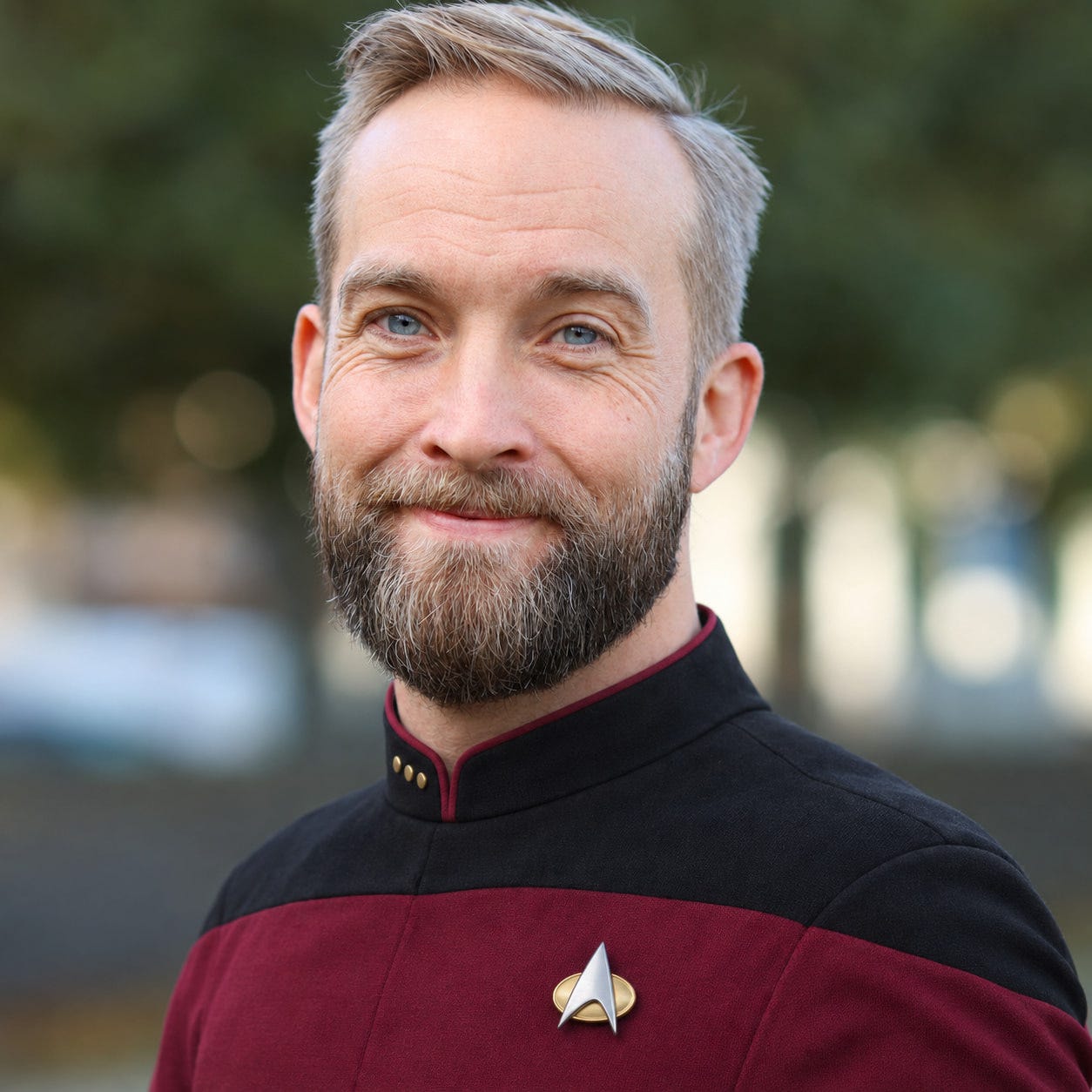
Bohlin is a tech entrepreneur and product developer. He co-founded Assently, which developed solutions for digital signing and identification. He later became head of product at Position Green, where among other things he worked on developing the company's sustainability platform and its push into AI.
Since late 2022, he has also been involved in EnergyNet. At first on the side of his regular job, but last summer he went all in and joined ViaEuropa as head of product.
More than just another brick in the wall
The product that Jonas Bohlin and the others are developing is actually even bigger than “just” controlling the electricity in buildings. It's called Brikks and it has a long history.
In 1998, Jonas Birgersson launched the world's first modern broadband network. In Lund, of course. Everything he does happens in Lund. It was a fiber network straight into people's homes. A year later, an open structure was added, where several service providers could compete freely.
This open model has since become the global standard. Instead of one operator building a network and locking the customers into it, the customers can switch.
That required a system, which was named Brikks. It handled everything that happened in the network. Customers had to be able to choose an internet provider, order services and change subscriptions. The operator had to be able to activate connections, monitor the network, deal with faults and handle billing.
Today, Brikks is used in more than 150 broadband networks in a number of countries.
Because Brikks has been developed nonstop since the late 1990s, the system has piled up an enormous amount of functionality and experience from real-world operation.
But why would an old system for broadband operators matter for the energy system of the future?
Because EnergyNet needs almost exactly the same thing.
EnergyNet is built on three basic parts:
The first is the Energy Protocol (EP), an open standard that lets different devices communicate about energy.
The second is energy routers, which use power electronics to control how electricity moves between different parts of the grid.
The third is EnergyNet operators, who coordinate and run the local energy grids.
And an operator like that needs software.
Someone has to keep track of all the connected buildings, solar panels, batteries, chargers and other energy resources. Someone has to monitor the grid, deal with faults, steer energy flows and make sure the right party gets paid when energy is delivered.
This is where Brikks comes in.
Instead of building a whole new operating system for EnergyNet, ViaEuropa has started using the software that has already been developed and tested in the broadband industry for almost three decades.
The same system that used to handle communication over fiber will now be able to handle electricity too.
It's a logical step. Both the internet and EnergyNet are built on the idea that lots of different players and resources should be able to connect through open standards, without everyone having to use the same supplier.
Not just running the power grid, but the whole city
But when they started adding the energy system to Brikks, they discovered something bigger.
If a property owner can log in and see both their fiber network and their power grid in the same system, why stop there?
Why not add heating, cooling, ventilation, door locks and the other systems in a building too?
That's what they now call Brikks Urban OS.
Just like with the internet, we'll then be able to build applications on the system, much like apps for smartphones. One developer could create a service that optimizes energy use in apartment buildings, another one that coordinates electric car charging and a third that improves preparedness for power outages.
They shouldn't have to build a separate technical integration with every property owner or every brand of batteries, chargers and other equipment.
So EnergyNet isn't starting from scratch on the software side. It builds on a system that has been developed over almost the entire modern history of the internet, and that has already solved many of the administrative and technical problems that come up when several players have to share a common infrastructure.
In the 1990s, the big idea was to separate the fiber network from the services delivered through it. That made it possible for several internet providers to compete over the same cables.
Now Birgersson, Bohlin, Ekholm and their colleagues are trying to apply the same principle to energy, and eventually to more parts of our buildings and cities.
So the most interesting thing about Brikks Urban OS might not be any single feature.
It's the chance to do for cities what operating systems and open standards have done for computers and the internet: create a common foundation that makes it easier for others to develop services, compete and find solutions to problems that no single supplier can foresee.
Energize
In the TV series Star Trek: The Next Generation, Captain Picard leads the starship Enterprise and its crew on voyages of discovery across the galaxy.
The series is set in a future where humanity has overcome much of the scarcity on Earth and explores new worlds together with other civilizations.
TNG, as it's known for short, aired from 1987 to 1994. Just under thirty years later, the story picked up again in the series Picard.
I know the symbolism is laid on pretty thick by now, but ever since my first conversation with Captain Birger, the parallel to the '90s and the internet revolution has been obvious. It's not just that EnergyNet is built on the same logic. Birgersson also has plenty of scars from the lessons he learned back then. But what he and his crew are aiming for now is even bigger. Back then they built on something others had created. Now they are creating the very foundation of the network, which others will then build on. That takes both old and new crew members.
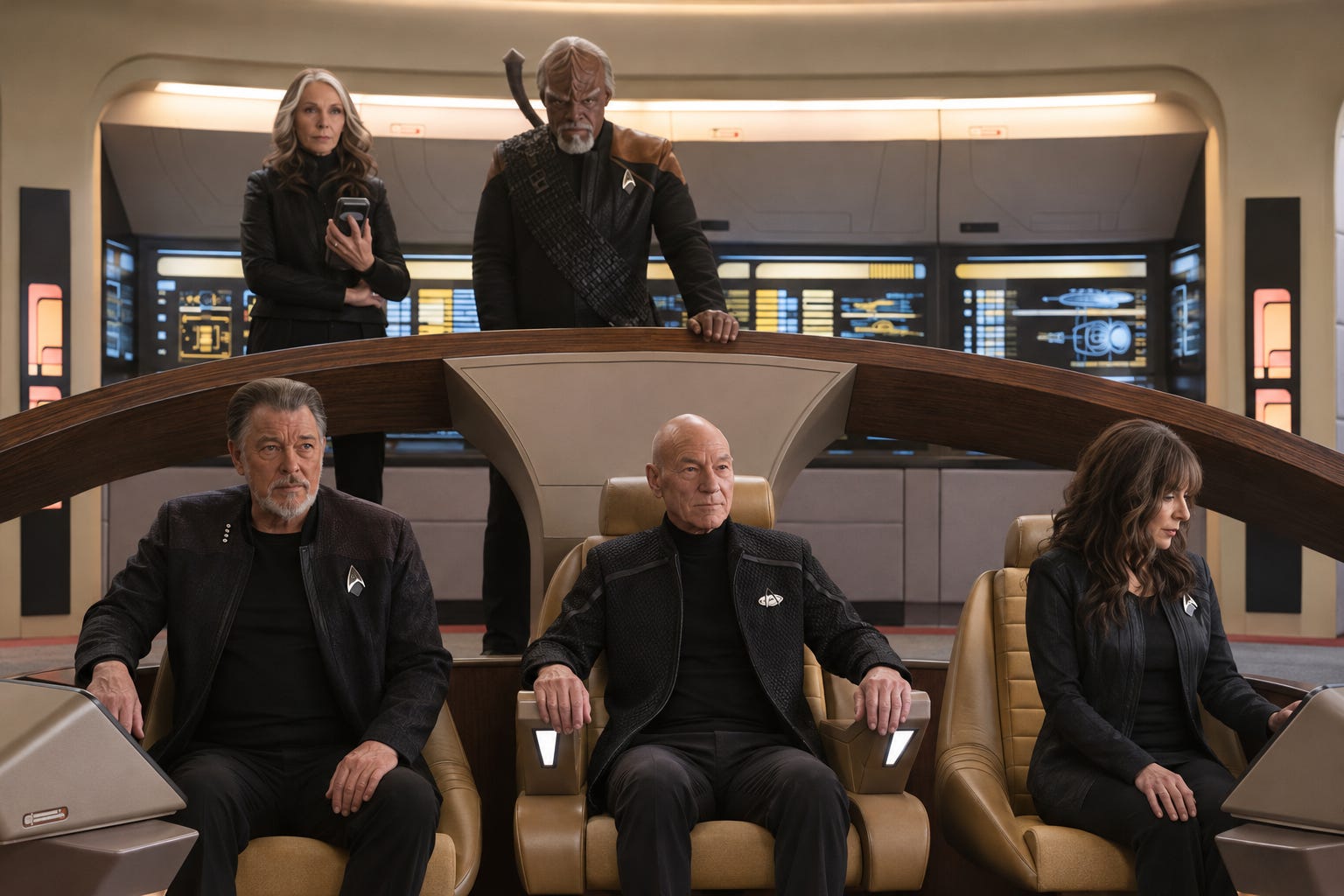
In the second-to-last episode of the TV series Picard, the TNG gang gets back together for a new mission. The reason is that someone has sabotaged the transporters. Those are the devices that can move people directly from one place to another by breaking them down in one spot and putting them back together in another, and that are activated when someone says “energize.”
They gather on the bridge of the Enterprise and take their positions. Picard sits down in the captain's chair, gives his instructions and finishes with his classic order:
“Engage!”
Mathias Sundin
Angry Optimist