


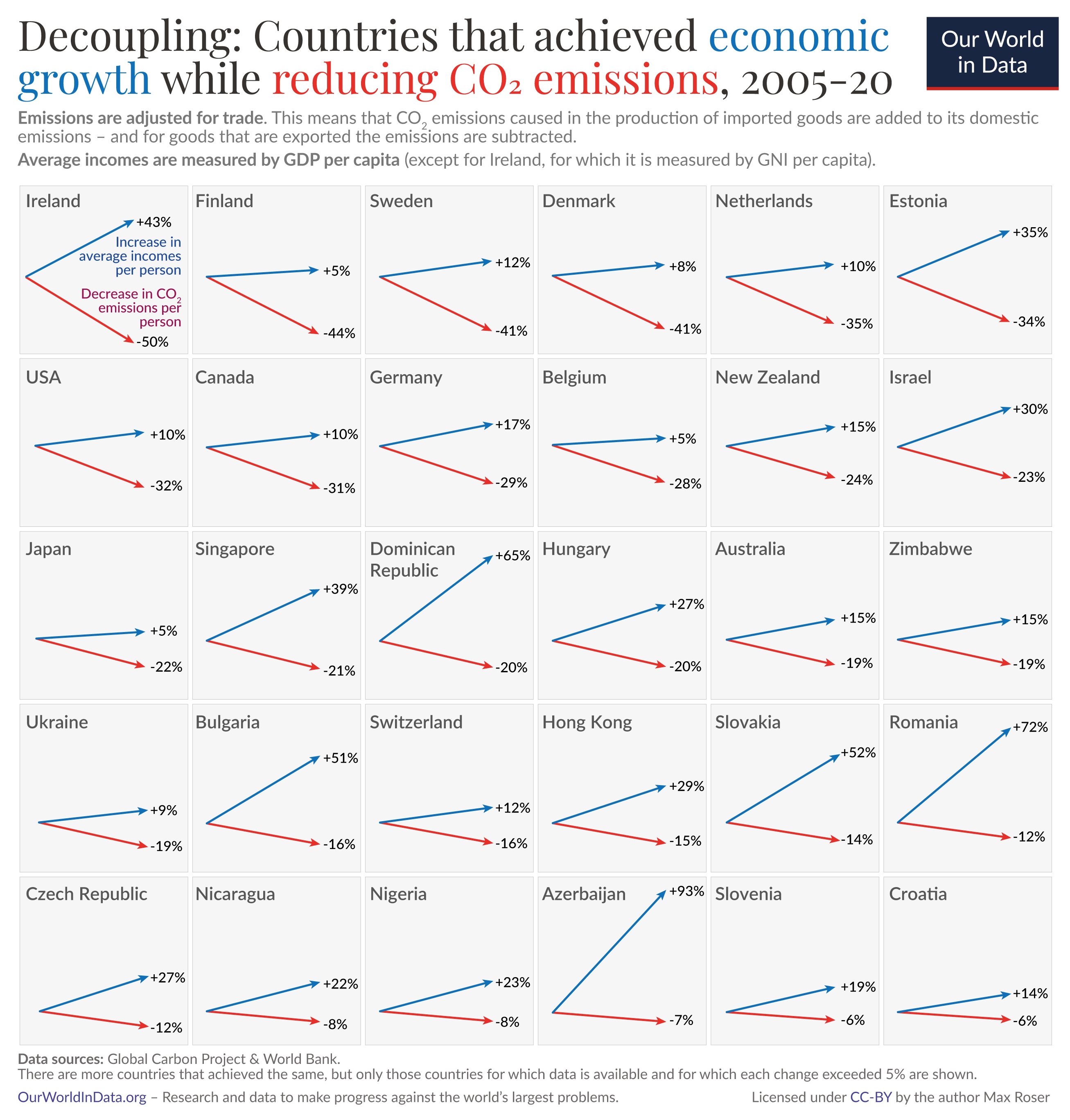
In most of the world's richest countries, CO2 emissions have been falling for several years.
The fact that global emissions have still gone up is mostly down to China.
Here's how Lauri Myllyvirta, lead analyst at the Centre for Research on Energy and Clean Air, put it last year:
“... China's been responsible for about 90 percent of the global emissions growth1 over the past decade since the Paris Agreement was negotiated. Another way of putting that is global emissions would have already peaked, or at least plateaued, if it wasn't for emissions growth in China.”
So if China's emissions turned downward, the world's would too.
That's exactly what's happening now.
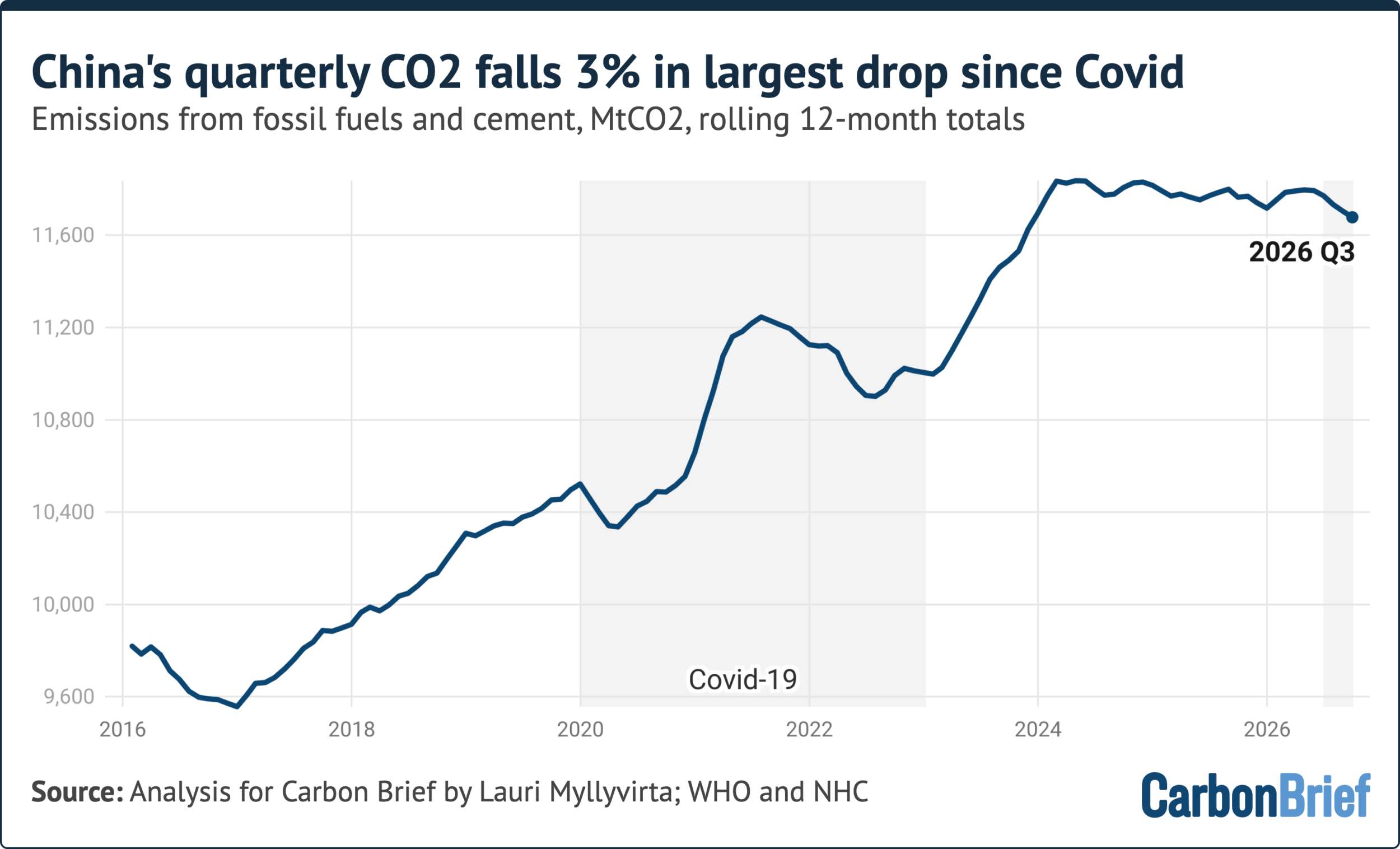
China's CO2 emissions from fossil sources rose in the first quarter, fell by about 1 percent in the second quarter and 3.1 percent in the third quarter.
Add to that the fact that both US and EU emissions are expected to fall this year.
That means the projection for the full year 2026 shows that emissions will fall worldwide.
The drop is happening because solar, wind and electrification are putting the brakes on emissions growth, while the Iran conflict is pushing down oil use.
To be fair, global emissions have fallen before. Almost always because of a crisis. Like 2020 with COVID, 2009 with the financial crisis and 1998 with the economic trouble in Asia.
This year we have a crisis too, this time tied to oil and the Iran war. Without it, there might have been an increase this year as well, but a very small one.
But I don't think the decline is a fluke, precisely because China is now joining the EU and the US in cutting emissions.
In 2024 China's emissions rose a little, last year they were almost flat and this year they look set to fall.
China will keep cutting emissions
There are two reasons why the decline in China, and therefore in the world, is going to continue.
The first reason is that renewable energy is cheaper than fossil fuels. So ramping up renewable energy production is a competitive advantage. As a result, renewables are growing fast in China.
The second reason is that renewable energy and the green transition are increasingly big business. China is a major global producer of solar panels, batteries and, more and more, electric cars.
On top of that, solar panels and batteries follow Wright's Law. The rule of thumb that, simply put, says the cost of making a product falls the more of that product gets made.
The more the Chinese increase their domestic renewable power generation, the more they can push down the cost of making solar panels, batteries and electric cars, and the more competitive they get.
That in itself brings other, geopolitical problems, but for carbon emissions it's a good thing, at least in the short term.
We're past the peak
There may be individual years ahead when emissions rise, but I think that from this year on, years when emissions fall will be more common than years when they rise.
In other words, we're getting climate change under control.
I think we should acknowledge to ourselves that right now we're passing a very important milestone: emissions are falling.
The next big milestone is getting them down to zero. That takes more work and a whole lot of change, but we'll take it on, buoyed by the knowledge that together we've taken control of the situation.
Mathias Sundin
Angry Optimist
Myllyvirta is referring to CO2 emissions. If you count all greenhouse gas emissions, the figure is 60–70 percent.